


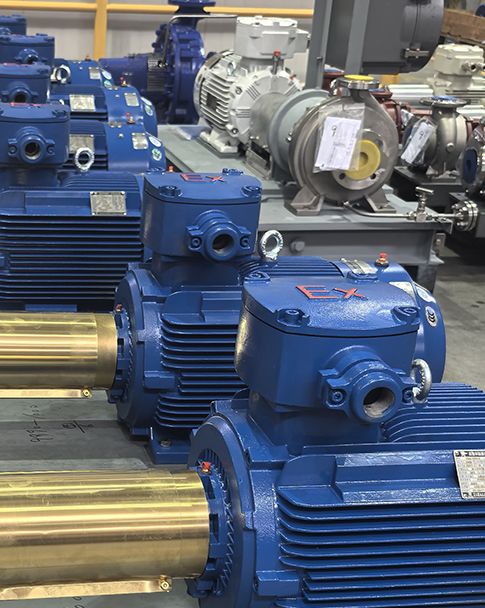
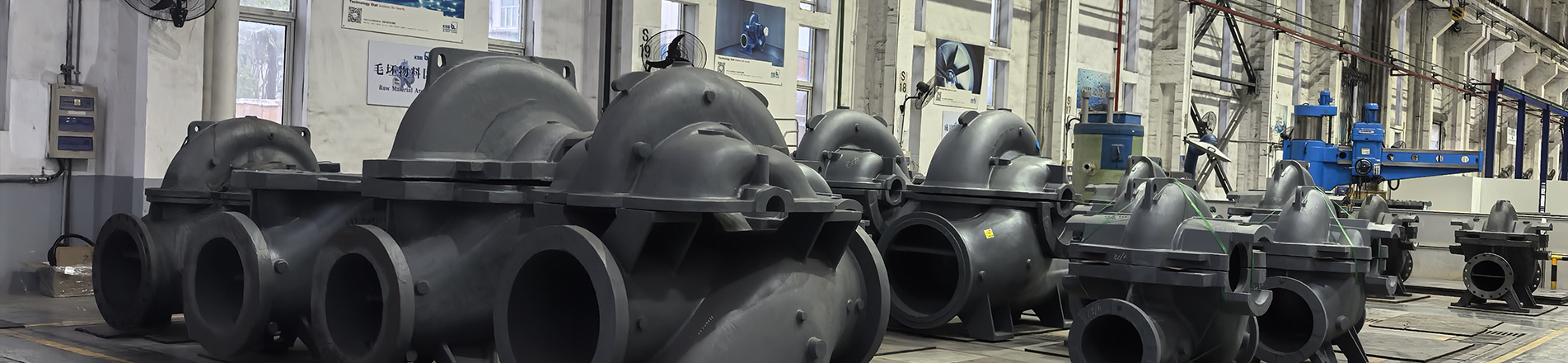
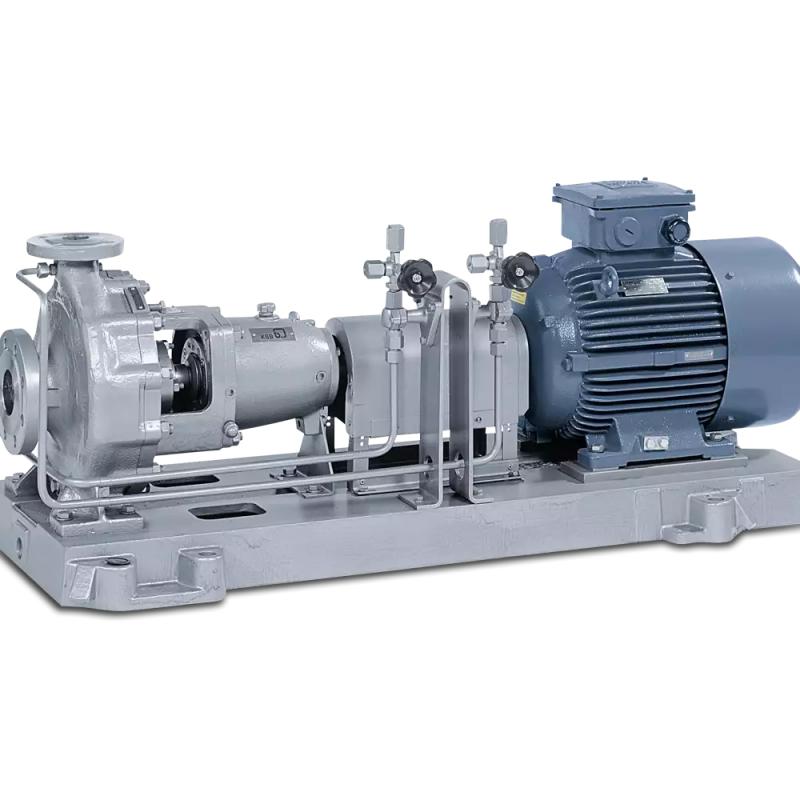
This guideline standardizes the daily start-up and shutdown, operational monitoring, maintenance, and emergency handling procedures for centrifugal pumps, with the core objective of ensuring safe and stable equipment operation and eliminating equipment failures or safety hazards caused by operational errors.
Ⅰ. Pre-operation Preparation (Mandatory Steps, All Required)
Before operation, conduct a thorough inspection of the equipment and surrounding environment, and proceed with the startup process only after confirming no abnormalities to avoid running with faults.
1. Visual inspection of the equipment: Check the pump body, motor, and base for any damage, looseness, or leakage; ensure the coupling guard and anchor bolts are intact and securely fastened to prevent detachment during operation that could cause injury.
2. Pipeline Inspection: Verify the status of inlet/outlet valves and bypass valves (ensure the inlet valve is fully open, outlet valve closed, and bypass valve closed before startup); inspect pipeline connections and flanges for leaks, as well as any blockages or deformations in the pipeline, to ensure unobstructed medium flow.
3. Lubrication Inspection: Check the oil level in the bearing housing to ensure it falls within the upper and lower limits of the oil gauge. The oil should be clear, free of turbidity and impurities. If the oil level is insufficient, promptly replenish with the same type of lubricating oil. If the oil quality deteriorates, it must be completely replaced.
4. Sealing inspection: Check for any leakage in the mechanical seal (or packing seal). Ensure the packing gland is neither too tight (which may cause overheating) nor too loose (which may lead to leakage).
5. Electrical Inspection: Check whether the motor wiring is secure and the grounding is proper; confirm that the control cabinet power supply is normal, and the instruments (pressure gauge, ammeter, liquid level gauge) display accurately without any fault alarms.
6. Pump priming and air venting: Open the vent valve at the top of the pump body, slowly open the inlet valve, and fill the pump with the medium until the medium discharged from the vent valve is bubble-free and forms a continuous liquid flow. Then close the vent valve (strictly prohibit starting the pump dry, as this may damage the mechanical seal and impeller).
Ⅱ. Startup Operation (Standard Procedure, Order Cannot Be Reversed)
1. Confirm again that the inlet valve is fully open, the outlet valve and bypass valve are closed, the exhaust valve has been closed, the lubricating oil level and sealing condition are normal, and the instrument display shows no abnormalities.
2. Upon receiving the start command, press the "Start" button on the control cabinet, observe the motor's starting status, and listen to whether the motor and pump body operate smoothly (no sharp abnormal noises or impact sounds).
3. Within 1-2 minutes after startup, closely monitor the instrument data: the outlet pressure remains stable within the equipment's rated pressure range, the ammeter indicates current not exceeding the motor's rated current, and the level gauge shows normal readings (no signs of idling or dry suction).
4. If a sudden pressure drop, abnormal current, unusual noise, or leakage occurs after startup, immediately press the "Stop" button to cut off the power supply, troubleshoot the fault, and then restart.
5. After normal startup, record data such as startup time, inlet and outlet pressure, and current, and include it in the equipment operation log.
Ⅲ. Monitoring during operation (daily core work)
During the operation of the centrifugal pump, the operator needs to conduct regular inspections, promptly detect and handle any abnormalities, and ensure the continuous and stable operation of the equipment.
1. Sound monitoring: During normal operation, the pump body and motor should emit a smooth and uniform running sound, without any noise, impact sound, or friction sound; If there is an abnormal sound, immediately investigate whether it is due to bearing wear, impeller jamming, pipeline blockage, or other issues.
2. Temperature monitoring: Touch the pump body, bearing box, and motor housing with your hands, and the temperature should be within the normal range (not exceeding 60 ℃, not too hot to the touch); If the temperature is too high, check whether the lubricating oil is sufficient, whether the seal is too tight, and whether the motor is overloaded, and deal with it in a timely manner.
3. Instrument monitoring: Record inlet and outlet pressure, current, and liquid level data every 30 minutes. If the pressure fluctuates too much, the current exceeds the rated value, or the liquid level is too low, adjust the opening of the inlet and outlet valves in a timely manner (it is strictly prohibited to close the outlet valve for a long time to avoid overheating of the pump body).
4. Sealing monitoring: Observe the leakage of mechanical seals (or packing seals). Mechanical seals allow for slight leakage (no more than 10 drops per minute), while packing seals allow for a small amount of dripping; If the leakage is too large, adjust the packing gland or replace the seal in a timely manner.
5. Environmental monitoring: Keep the surrounding area of the pump body clean, free of debris accumulation, water accumulation, and oil stains; It is strictly prohibited to dismantle the protective cover and pipelines while the equipment is running, and it is strictly prohibited to touch rotating parts with hands.
Ⅳ. Shutdown operation (divided into normal shutdown and emergency shutdown, executed as needed)
(Ⅰ)Normal shutdown
1.After receiving the shutdown command, slowly close the outlet valve (to avoid damaging the pipeline and pump body due to sudden pressure rise).
2.After the outlet valve is closed, press the "stop" button on the control cabinet to cut off the motor power.
3. Close the inlet valve. If the machine is shut down for a long time (more than 24 hours), open the drain valve at the bottom of the pump body to discharge the residual medium inside the pump and prevent the medium from crystallizing and corroding the pump body; Simultaneously turn off the instrument power and clean up the debris around the equipment.
4. Record downtime, reasons for downtime, and complete the operation ledger filling.
(Ⅱ)Emergency stop
If the following situations occur, immediately press the "emergency stop" button, cut off the power, and report to the team leader or equipment administrator. Forced operation is strictly prohibited:
1. The pump body and motor experience severe vibration, sharp abnormal noise, or collision or jamming;
2. Sudden increase or overload of motor current, or smoking or fire of the motor;
3. Mechanical seals (or packing seals) leak a large amount, causing safety hazards due to medium leakage;
4. The import and export pipelines have ruptured or leaked, making it impossible to continue operating;
5. Abnormal instrument display and inability to adjust may result in equipment damage or safety accidents.
Ⅴ. Daily maintenance and upkeep (mandatory daily/weekly to extend equipment lifespan)
(Ⅰ)Daily maintenance
1. Check the lubricating oil level during inspection and replenish it in a timely manner; Clean the oil and dust on the surface of the pump body and pipeline.
2. Check the sealing leakage situation. If there is a slight leakage, adjust the packing gland. If there is a serious leakage, report it for replacement in a timely manner.
3. Verify the operation ledger to ensure complete and accurate data recording.
(Ⅱ) Weekly maintenance
1. Check the concentricity of the coupling, and if there is any deviation, adjust the anchor bolts in a timely manner.
2. Check the temperature and rotational flexibility of the bearings. If there is any jamming or heating, promptly check the lubricating oil or replace the bearings.
3. Rinse the inlet and outlet pipeline filters, remove impurities, and avoid blockages.
4. Check the flexibility of the valve switch and lubricate the stuck valve.
Ⅵ. Common faults and troubleshooting methods (basic faults that operators can handle on site)
| common faults | causes of failure | solutions |
| no pressure and no liquid delivery after pump startup |
1. pump chamber not fully filled with medium, with residual air inside 2. inlet pipeline clogged or inlet valve not fully opened 3. impeller damaged or seized |
1. refill pump with medium and vent air completely 2. clean inlet pipeline and fully open inlet valve 3. shut down pump to inspect impeller, report for replacement if necessary |
| severe pressure fluctuation during operation |
1. improper opening degree of inlet and outlet valves 2. pipeline leakage and air ingress 3. unstable medium flow rate |
1. adjust valve opening degree to stabilize flow rate 2. inspect pipeline, repair leakage points and vent air 3. check medium supply condition |
| excessive bearing temperature |
1. insufficient lubricant or deteriorated lubricant quality 2. bearing wear and aging 3. misalignment of coupling |
1. supplement or replace lubricant 2. report for bearing replacement 3. calibrate concentricity of coupling |
| severe seal leakage |
1. excessively loose packing gland 2. wear and aging of sealing components 3. pump shaft deformation |
1. adjust packing gland tightness 2. replace worn sealing components 3. report to inspect pump shaft, perform straightening or replacement |
| excessive motor current |
1. oversized opening degree of outlet valve leading to overloading 2. pump body seizing and impeller clogging 3. motor malfunction |
1. adjust outlet valve opening degree to reduce load 2. shut down pump to clean impeller and troubleshoot seizing causes 3. report for motor inspection |
Ⅶ. Safety precautions (of utmost importance, strictly adhere to)
1. Personal protective equipment (safety helmet, protective gloves, protective shoes, etc.) must be worn before operation, and illegal operations are strictly prohibited.
2. It is strictly prohibited to start an empty pump or operate it with faults, and it is strictly prohibited to disassemble or repair the equipment during operation.
When dealing with medium leaks, corresponding protective measures should be taken according to the characteristics of the medium to avoid contact with the skin and inhalation of gases.
If there is an emergency situation during the operation of the equipment, first press the emergency stop button and then report for handling. Do not handle major faults without authorization.
5. Regularly participate in equipment operation training, familiarize oneself with equipment structure, performance, and operation procedures, and do not operate independently without training.
Before leaving work, it is necessary to confirm that the equipment has been shut down, valves are closed, and power is cut off, and to do a good job of on-site cleaning.
Note:
This guide is a basic standard for daily operations. If there are special requirements for on-site equipment (such as special media or customized equipment), additional operational details should be supplemented in conjunction with the equipment manual and on-site management regulations. All operations must follow the unified command of the team leader and equipment administrator.




 IPv6 network supported.