


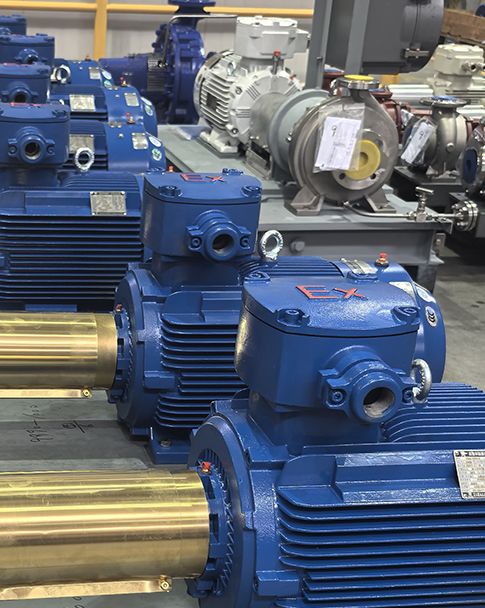
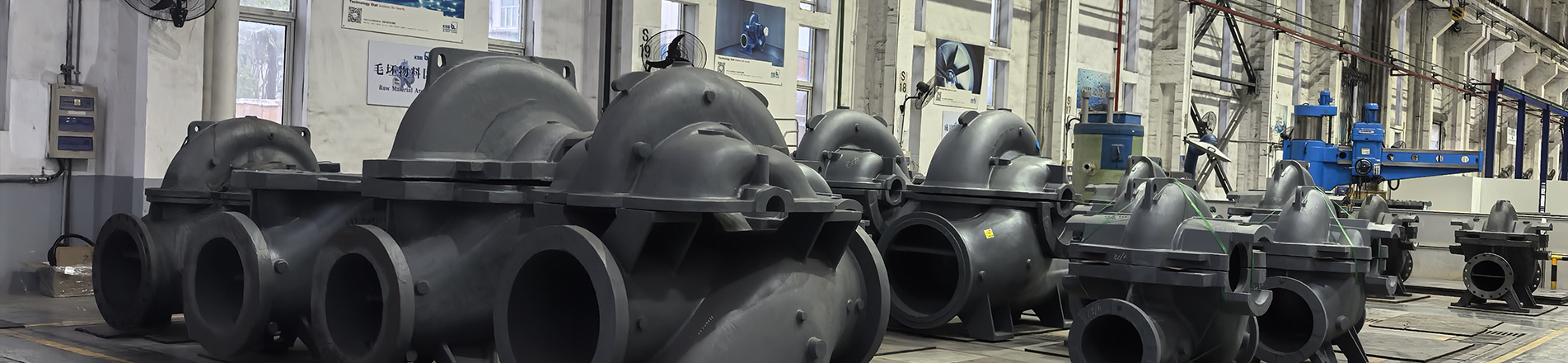
In industrial production, building water supply, agricultural irrigation, HVAC circulation, and other scenarios, pumps serve as core fluid transportation equipment. Any shutdown, leakage, abnormal noise, or failure to deliver water can mildly disrupt production and daily life, or severely lead to equipment damage and system failure.
Check for water flow stability: Corresponding to inspect issues such as air entrapment, blockage, and valve closure.
Check for abnormal noise from the motor: This helps identify faults such as bearing wear, cavitation, or looseness.
Check for pump body overheating: Corresponding to troubleshooting overload, phase loss, poor heat dissipation, etc.
Check whether voltage and current are normal: This corresponds to electrical faults such as locked electrical circuits and motor windings.
In fact, there is a standardized and rapid procedure for diagnosing water pump failures. Without requiring specialized instruments or disassembling the entire unit, the fault can be pinpointed through four steps: visual inspection, auditory examination, tactile assessment, and measurement.
一、Principle of prioritization: For pump fault diagnosis, prioritize electrical components over mechanical parts, and external components over internal ones.
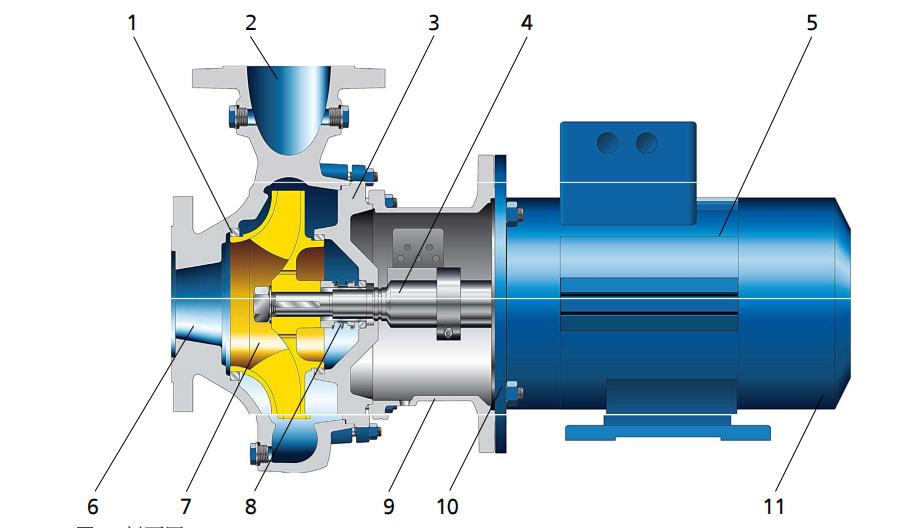
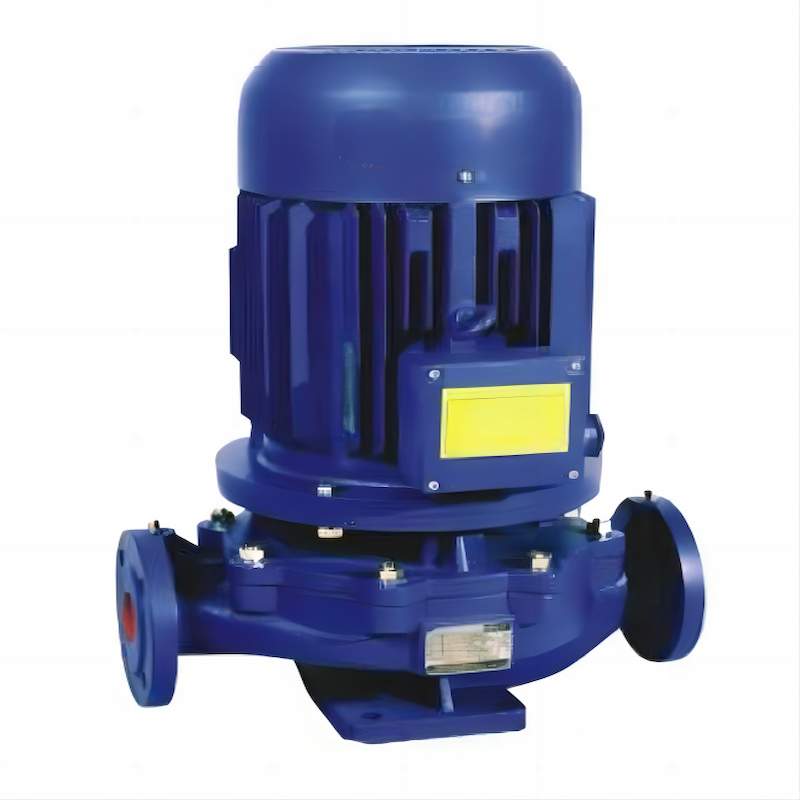
1.Throttle Clearance 2.Discharge Nozzle 3.Pump Cover 4.Shaft 5.Motor Cover 6.Suction Connection 7.Impeller 8.Shaft Sleeve .9Drive Sleev 10.Rolling Bearing
No. English Name Chinese Name 1 Throttle Clearance 2 Discharge Nozzle 3 Pump Cover 4 Shaft 5 Motor Cover 6 Suction Connection 7 Impeller 8 Shaft Sleeve 9 Drive Sleeve 10 Rolling Bearing
The key to rapid assessment lies in minimizing disassembly and maximizing inspection, progressing from simple to complex procedures, and avoiding unnecessary disassembly. Two golden principles should be remembered:
1. Electrical issues before mechanical ones: Prioritize inspection of power supply, wiring, control systems, and protective devices. Ninety percent of "non-start" incidents are electrical in nature, not due to pump failure.
2. External inspection before internal inspection: Start with valves, pipelines, filters, liquid levels, and bottom valves for preliminary troubleshooting, followed by examination of internal components such as pump bodies, impellers, bearings, and seals.
Whether it's a centrifugal pump, self-priming pump, submersible pump, pipeline pump, or circulation pump, the root cause of failures remains consistent across all types, allowing for rapid troubleshooting through this standardized approach.
二、 Four Major Core Failures: Symptoms + Causes + Rapid Diagnosis Method
Fault 1: The water pump fails to start completely with no response whatsoever
This is the most common fault. The first on-site response should not involve pump disassembly; instead, prioritize checking the power supply and control systems.
-Rapid judgment steps
1. Inspect the power supply: Check if the circuit breaker, residual current device (RCD), and fuse have tripped/fused, and whether the indicator lights are illuminated;
2. Inspection and control: Check for alarms in contactors, thermal relays, and frequency converters, as well as malfunctions in buttons, float balls, and pressure switches;
3. Electrical measurement: Use a multimeter to check voltage (whether the three-phase 380V is balanced and the single-phase 220V is normal), and inspect wiring terminals for looseness or phase loss.
4. Coupling inspection: After power-off, manually rotate the coupling/fan. If rotation is impossible, it indicates impeller jamming, bearing seizure, or foreign object ingress in the pump.
-Core conclusions: No response + smooth winding = electrical circuit failure; No response + winding jam = mechanical locked rotor.
Fault 2: The water pump can rotate but fails to discharge water/has extremely low flow rate/cannot increase pressure
The most troublesome issue for users, "idle operation without work," is primarily caused by air lock, blockage, reverse rotation, and suction faults.
-Rapid judgment steps
1. Inspect import and export conditions: Check if the imported valve is fully open, whether the filter screen is clogged, if the bottom valve is leaking or stuck, and if the liquid level is below the suction inlet.
2. Air binding: Failure to priming the centrifugal pump before startup or air leakage in the suction line can result in air accumulation within the pump, causing violent oscillations of the pressure gauge and abnormal readings on the vacuum gauge.
3. Check the rotation direction: If the phase sequence of the three-phase pump is reversed, the impeller will rotate in the wrong direction, resulting in idling without water extraction. This can be verified by swapping any two phases.
4. Internal inspection: Impeller wear, excessive clearance of the mouth ring, and pipeline scaling can lead to continuous decline in flow rate and pressure.
-Core conclusion: Pressure gauge vibration = intake/gas binding; normal pressure with no water discharge = outlet blockage/valve not open; reverse rotation + no flow = phase sequence error.
Fault 3: Abnormal noise + significant vibration, resembling the shaking of a 'tractor'
Abnormal vibration serves as a fault warning signal. Delayed action may lead to bearing damage, shaft bending, and oil/water leakage from the machine seal.
-Rapid judgment steps
1. Listen to the sounds: High-frequency screeching = bearing wear/oil deficiency; Muffled rumbling = loose foundation feet, uneven base, misalignment of coupling; Explosive sounds = cavitation;
2. Tactile vibration: Upon palpation of the pump body, motor, and base, significant shaking indicates rotor imbalance, impeller foreign body obstruction, or pipeline stress-induced tension.
3. Cavitation detection: Excessively low inlet pressure, excessively high suction head, or elevated medium temperature can generate pitting cavitation sounds accompanied by flow rate fluctuations.
4. Check installation: Misalignment of the coupling, belt pulley misalignment, or failure of vibration damping pads can all lead to resonance.
-Core conclusions: Screeching = bearing problem; rumbling = looseness/alignment; popping = cavitation; vibration = imbalance/pipe stress.
Fault 4: Pump body/motor overheating, burning sensation, or even tripping
Overheating is a direct manifestation of overload, phase loss, friction, and poor heat dissipation. Continued operation may lead to winding burnout and bearing failure.
-Rapid judgment steps
1. Temperature measurement: If the motor housing temperature exceeds 60°C (with no hand contact lasting 3 seconds) or the bearing area becomes overheated, immediately shut down the machine.
2. Current detection: Measure operating current with a clamp meter. Exceeding rated current indicates overload (due to blockage, impeller jamming, or mismatched head); low current indicates idling or air binding.
3. Mechanical inspection: Bearing oil deficiency, damage, pump shaft bending, and excessive tightness of the machine seal can all increase frictional heat generation.
4. Electrical inspection: Three-phase phase loss, low voltage, and winding short circuit are the most hazardous causes of motor overheating.
-Core conclusions: High current + overheating = mechanical overload/blockage; Normal current + overheating = bearing/heat dissipation/electrical fault.
Fault 5: Leakage of water/oil at the machine seal/packing area
Seal leakage is a wear-related failure. If minor leaks are left untreated, they may escalate into major leaks and even damage the shaft sleeve.
-Rapid judgment steps
1. Identify leakage points: dripping water at pump shaft position = packing wear/sealing aging; leakage at flange/interface = gasket damage/bolts loosening.
2. Check the packing material: Rapid dripping or premature drying of the stuffing box indicates improper installation. The normal rate should be 30-60 drops per minute.
3. Machine seal inspection: Dry rotation, particulate impurities, and misalignment can rapidly damage the mechanical seal, resulting in jet-like leakage.
-Core conclusion: Drip leakage = normal wear; Spray leakage = mechanical seal failure/sleeve damage.
三、 General Rapid Assessment Mnemonic: Memorize on-site to avoid detours
To facilitate on-site memory, the core diagnostic logic is summarized into a 16-character mnemonic: Do not check electricity if no ignition occurs, do not check gas if no water supply; Abnormal noise indicates shaft issues, overheating suggests load overload.
Extended practical mnemonic:
If the disc rotates but doesn't move, it must be stuck.
-Pressure gauge vibration indicates air intake.
-Three-phase reversal phase-shifting line
-Bearing squeals: replace oil promptly
For overheat trip, first check the current.
四、 On-site Rapid Screening Procedure
1. Power outage safety: Implement circuit breaker tripping and signage to ensure operational safety;
2. Visual inspection: Check for leaks (water/oil), wiring, valves, filters, and liquid level.
3. Manual turntable operation: Check for mechanical jamming;
4. Power-on test: listen for sounds, palpate vibrations, and observe pressure/flow rate;
5. Instrument measurement: measure voltage and current, and identify electrical/mechanical faults;
6. Precise troubleshooting: Avoid blind pump disassembly; first resolve external and electrical issues.
This workflow covers over 95% of on-site faults, requiring neither experience nor disassembly, enabling even novice users to make quick diagnoses.
五、 Daily Prevention: Minimizing failures is more critical than rapid diagnosis
Rapid fault diagnosis is akin to 'firefighting,' while routine maintenance serves as 'fire prevention.' By implementing these measures, pump failure rates can be reduced by 80%.
1. Regular cleaning: Import filters, impellers, and pipelines to prevent clogging by debris;
2. Standardized startup procedure: The centrifugal pump must be primed and vented to eliminate air entrainment.
3. Regular lubrication: Add or replace oil in bearings as scheduled to maintain lubrication status;
4. Alignment inspection: Regularly tighten the coupling, base, and anchor bolts.
5. Monitoring parameters: Focus on current, pressure, temperature, and vibration, with early intervention for abnormalities;
6. Prevent idling: Idling is the 'top killer' of machine seals, bearings, and impellers.
六、 Faults Are Not to Be Frightened: Methods for Diagnosis Exist
As a general-purpose equipment, pump failures are predominantly caused by improper operation, lack of maintenance, and external factors, with pump body damage itself accounting for a relatively low proportion. By mastering the four-step method of "inspection, listening, palpation, and measurement" and adhering to the principle of "electricity before machinery, exterior before interior," on-site rapid localization and troubleshooting can be achieved, thereby avoiding downtime losses and reducing maintenance costs.
This evaluation method applies universally to various scenarios, including factory operations and maintenance, property utilities (water and electricity), agricultural irrigation, and HVAC systems.



 IPv6 network supported.