


Technical Video
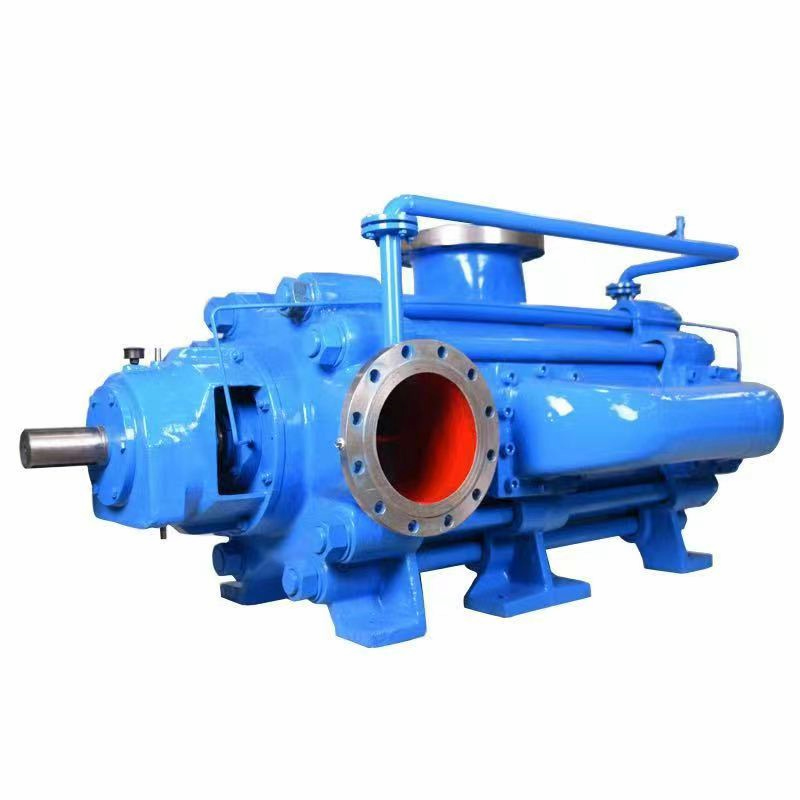
Abnormal vibration of pumps is a key indicator for assessing their reliability. Multiple factors can cause multi-stage pump vibrations, including water flow conditions, fluid motion complexity, dynamic-static balance, and high-speed rotating components—all of which may compromise pump stability. Below is a comprehensive analysis of the causes of pump vibrations. 1. Axis Pump shafts are excessively long, making them prone to dynamic friction between moving components (driving shaft) and stationary parts (sliding bearings or mouth rings) due to insufficient pump stiffness, excessive deflection, or poor shaft alignment. This friction causes pump vibration. The extended shaft length also amplifies vibrations in the submerged section of multi-stage pumps when exposed to water flow impacts. Additionally, excessive clearance in the shaft balance disc or improper adjustment of axial movement can induce low-frequency shaft oscillations, resulting in bearing vibration and rotational shaft eccentricity, which may further lead to shaft bending vibrations. 2、Foundation and Pump Support The contact fixation method between the drive unit frame and foundation is suboptimal, resulting in inadequate vibration absorption, transmission, and isolation capabilities of both the foundation and motor system. This leads to excessive vibration levels in both components, causing the pump foundation to loosen. During installation, the pump unit may form an elastic foundation or experience reduced foundation stiffness due to oil immersion cavitation, triggering a critical rotational speed with a 180-degree phase difference from the vibration. This increases the pump's vibration frequency, and if the increased frequency aligns with an external factor's frequency, it amplifies the amplitude of the multistage pump. Additionally, loose foundation anchor bolts decrease restraint stiffness, exacerbating motor vibration. 3. Coupling Improper circumferential spacing of coupling bolts, compromised symmetry, eccentricity in the coupling's extension section, excessive taper tolerance, poor static or dynamic balance, overly tight elastic pin coupling, loss of elastic pin's self-adjusting function causing misalignment, excessive shaft coupling clearance, mechanical wear of the coupling rubber ring leading to reduced sealing performance, and inconsistent quality of transmission bolts used in the coupling—all these factors can cause vibration in multi-stage pumps. 4. Factors inherent to the water pump itself The asymmetric pressure field generated during impeller rotation; vortex formation in suction tanks and intake pipes; vortex generation and dissipation within the impeller, volute, and guide vanes; valve half-open-induced vortex-induced vibration; uneven outlet pressure distribution due to limited impeller blade count; flow separation within the impeller; surge; pulsating pressure in flow channels; cavitation; water flow in the pump body causing friction and impact, such as water impacting the tongue and leading edges of guide vanes, resulting in vibration; boiler feed pumps handling high-temperature water are prone to cavitation-induced vibration; pressure pulsations in the pump body, primarily caused by excessive clearance between the impeller seal ring and pump body seal ring, leading to significant internal leakage, severe backflow, and subsequent unbalanced axial force on the rotor and pressure pulsations, which intensify vibration. Furthermore, for stainless steel hot water pumps used in hot water delivery systems, uneven preheating prior to startup or malfunctioning sliding pin systems can cause thermal expansion in the pump assembly, triggering severe vibrations during the startup phase. If internal stresses from thermal expansion cannot be released, this may alter the stiffness of the shaft support system. When the modified stiffness becomes a multiple of the system's angular frequency, resonance occurs. 5. Motor Loose motor structural components, loose bearing positioning devices, excessively loose silicon steel sheets in the iron core, and reduced bearing support stiffness due to wear can all cause vibrations. Eccentric mass distribution, rotor bending, or uneven mass distribution resulting from quality issues may lead to excessive static and dynamic balance deviations. Additionally, broken squirrel-cage bars in the rotor of squirrel-cage motors can cause vibrations due to an imbalance between the magnetic force acting on the rotor and its rotational inertia. Other contributing factors include phase loss in the motor and power supply imbalance across phases. Regarding the stator windings, poor installation quality may lead to resistance imbalance between phases, resulting in uneven magnetic field distribution. This creates unbalanced electromagnetic forces that act as excitation forces, ultimately triggering vibrations. 6. Pump Selection and Variable Operating Conditions Every pump has its own rated operating point. Whether the actual operating conditions match the design specifications significantly impacts the pump's dynamic stability. While pumps operate more stably under design conditions, variable operating conditions can cause increased vibration due to radial forces generated in the impeller. Factors such as improper single-pump selection or parallel operation of mismatched pump models may all contribute to vibration in multi-stage pumps. 7. Bearings and Lubrication Insufficient bearing stiffness reduces the first critical speed, leading to vibration. Poor performance of guide bearings, such as inadequate wear resistance, improper fixation, or excessive bearing bush clearance, can also cause vibrations. Additionally, wear in thrust bearings and other rolling bearings may intensify both axial movement and bending vibrations. Lubrication failures—such as improper lubricant selection, degraded oil, excessive impurities, or clogged lubrication lines—can worsen bearing conditions and trigger vibrations. Self-excited vibrations in motor sliding bearing oil films may also contribute to operational instability. 8. Pipelines and Their Installation and Fixation The pump's outlet pipeline support lacks sufficient rigidity, causing excessive deformation that presses the pipeline against the pump body. This results in misalignment damage between the pump body and motor. During installation, the pipeline experiences excessive force, leading to high internal stress when connecting the inlet and outlet pipes to the pump. Loose connections in the inlet and outlet pipelines reduce or even nullify the restraint rigidity, causing partial or complete fracture of the outlet flow channel. Broken fragments may get lodged in the impeller, obstructing the pipeline. Issues such as air pockets at the outlet, missing or improperly opened water discharge valves, air intake at the inlet, uneven flow fields, and pressure fluctuations can directly or indirectly cause vibrations in the multistage pump and its pipelines. 9. Fit between components The motor shaft and pump shaft exhibit concentricity deviations. A coupling is used at the motor-pump shaft connection, but its concentricity is out of specification. This causes increased wear on the designed clearance between moving and stationary components (e.g., between the impeller hub and the mouth ring). Additionally, the clearance between the intermediate bearing bracket and the pump cylinder exceeds the standard, while the sealing ring clearance is improperly adjusted. These factors collectively create imbalance, resulting in uneven clearance around the sealing ring. Issues like the mouth ring not fitting into the groove or the partition plate not aligning with the groove can lead to such problems. All these adverse factors contribute to the vibration of the multistage pump. 10. Impeller The pump impeller's eccentricity stems from inadequate quality control during manufacturing, such as casting defects or insufficient machining precision. When handling corrosive liquids, the impeller's flow channels may be eroded, causing misalignment. Key factors include proper blade count, optimal outlet angle, appropriate wrap angle, and correct radial spacing between the throat tongue and impeller outlet edge. During operation, initial contact between the impeller's mouth ring and the pump body's mouth ring, along with friction between stage bushings and partition bushings, evolves from initial contact to mechanical wear, ultimately exacerbating the pump's vibration.
Design practice Fluid system design is typically developed to meet the requirements of other systems. For instance, in cooling applications, heat transfer demands determine the required number of heat exchangers, their dimensions, and the necessary flow rates. Subsequently, pump performance parameters are calculated based on system layout and equipment characteristics. In other applications like municipal wastewater discharge, pump capacity depends on the required water volume, as well as the necessary head and pressure. Pump selection and configuration must be determined according to the flow and pressure requirements of the system or service. After determining the service requirements of the pumping system, the pump/motor combination, layout, and valve specifications must be designed. Selecting the appropriate pump type, along with its speed and power characteristics, requires an understanding of its working principles. The most challenging aspect of the design process is achieving cost-effective alignment between pump and motor characteristics and system requirements. Given the significant variations in flow rate and pressure demands, this alignment often becomes complex. To ensure equipment meets system requirements under extreme operating conditions, designers typically employ redundant designs. Moreover, pumps exceeding required specifications increase material, installation, and operational costs. However, adopting larger-diameter piping systems may reduce pumping energy costs. Fluid energy In practical pump applications, fluid energy is typically measured by head (Head). Measured in feet or meters, head refers to the height of a fluid column in a system with equivalent potential energy. This term is convenient as it combines density and pressure factors, allowing centrifugal pumps to be evaluated across various fluid systems. For example, at a given flow rate, a centrifugal pump may produce different outlet pressures for fluids with different densities, yet the head values for these two conditions remain identical. The total head of a fluid system consists of three components or measurements: static head (gauge pressure), height head (or potential energy), and velocity head (or kinetic energy). Static pressure: As the name implies, it refers to the pressure of fluid in a system, measured by conventional pressure gauges. While liquid level height significantly affects static pressure, it also serves as an independent measure of fluid energy. For example, a pressure gauge on a ventilation tank may display atmospheric pressure readings. However, if the tank is positioned 15 meters above the pump, the pump must generate at least 15 meters of head to pressurize the water into the tank. Height head (or potential energy): The gravitational potential energy of the fluid, defined as the vertical height difference between the inlet and outlet, measured in meters (m). It represents the vertical distance the fluid is lifted. Velocity head (also known as "dynamic head") measures fluid kinetic energy. In most systems, it is generally smaller than static head. When installing pressure gauges, designing systems, or interpreting gauge readings, account for the velocity head—especially in pipelines with varying diameters. The downstream gauge reading may be lower than the upstream one, even when the distance between them is only 0.2 meters. Fluid properties In addition to the type of system served, the demand for pumps is also influenced by fluid properties such as viscosity, density, particle content, and vapor pressure. Viscosity is a property that measures the shear resistance of fluids. High-viscosity liquids require more energy during flow because their shear resistance generates heat. Certain fluids (such as cold lubricating oils below 15°C) have such high viscosity that centrifugal pumps cannot effectively transport them. Therefore, variations in fluid viscosity within the system's operating temperature range are critical factors in system design. A pump/motor combination properly sized for 26°C oil temperature may appear underpowered when operating at 15°C. The quantity and characteristics of particulate matter in fluid systems significantly influence pump design and selection. Certain pumps cannot tolerate excessive impurities. Moreover, if inter-stage seals in multi-stage centrifugal pumps experience erosion, their performance will noticeably degrade. Other pumps are specifically engineered for handling fluids with high particulate content. Due to their operational principles, centrifugal pumps are commonly used to transport fluids containing high particulate loads, such as coal slurry. The difference between fluid vapor pressure and system pressure constitutes another fundamental factor in pump design and selection. Accelerating fluid to high speeds (a characteristic of centrifugal pumps) causes a drop in static pressure. This pressure reduction may lower fluid pressure to its vapor pressure or below. At this point, the fluid "boils" and transitions from liquid to gas. This phenomenon, known as cavitation, severely impacts pump performance. During cavitation, microbubbles form as the fluid undergoes phase change. Since vapor occupies significantly more volume than liquid, these bubbles reduce flow through the pump. The destructive aspect of cavitation occurs when these bubbles violently collapse and re-enter the liquid phase. During the collapse process, high-speed water flow impacts surrounding surfaces. This impact force often exceeds the mechanical strength of the impacted surface, resulting in material loss. Over time, cavitation can cause severe erosion problems in pumps, valves, and pipelines. Other causes of similar damage include suction backflow and discharge backflow. Suction backflow refers to the formation of destructive flow patterns in the impeller's suction zone, leading to cavitation-like damage. Similarly, discharge backflow occurs when destructive flow patterns develop in the impeller's external region. These backflow effects are typically caused by pumps operating at excessively low flow rates. To prevent such damage, many pumps are labeled with minimum flow rate ratings. System type Like the pump, the characteristics and requirements of the pump system are varied, but generally can be divided into closed circulation system and open circulation system. Closed-loop systems: Fluids circulate along a path with a common starting and ending point. Pumps serving closed-loop systems (e.g., cooling water systems) typically do not require overcoming static head loads unless there are vented storage tanks at different elevations within the system. In closed-loop systems, friction losses from system piping and equipment constitute the primary load on the pump. Open-loop systems: These systems feature input and output ports, where fluid is transported from one point to another. Unlike closed-loop systems, they typically require pumps to overcome static head demands caused by height differences and tank pressurization needs. A prime example is mine drainage systems, which use pumps to lift water from underground to the surface. In such cases, the static head often constitutes the primary load on the pump. Principle of flow control Flow control is critical to system performance. Adequate flow ensures proper equipment cooling and enables rapid tank emptying or refilling. Maintaining sufficient pressure and flow to meet system requirements often leads to oversized pump and drive motor selections. Since system designs incorporate flow control devices to regulate temperature and prevent equipment overpressure, oversized pump selection imposes high energy consumption on these flow control mechanisms. There are four main methods for flow control of the control system or its branch: throttle valve, bypass valve, pump speed control and multi-pump combination. The appropriate flow control method depends on the system size and layout, fluid characteristics, shape of pump power curve, system load and sensitivity of system to flow rate change. A throttle valve restricts fluid flow, allowing less fluid to pass through the valve and thereby creating a pressure drop across it. Throttle valves are generally more efficient than bypass valves because they maintain upstream pressure when closed, facilitating fluid flow through parallel system branches. The bypass line allows fluid to flow around system components. A major drawback of bypass valves is their adverse impact on system efficiency: the power used to pump bypass fluid is wasted. However, in systems primarily operating at static head, bypass valves may be more efficient than throttle valves or systems equipped with adjustable speed drives (ASDs). Pump speed control employs both mechanical and electrical methods to match the pump's speed with the system's flow/pressure requirements. ASD (Automatic Speed Detection), multi-speed pumps, and multi-pump configurations are typically the most efficient flow control solutions, especially in systems where friction head predominates. This is because the fluid energy added by the pump is directly determined by the system's demands. Pump speed control is particularly suitable for systems where friction head plays a dominant role. Both ASD and multi-speed motors can operate at varying speeds through drive pumps to meet different system requirements. During periods of lower system demand, the pump operates at reduced speed. The key functional difference between ASD and variable-speed motors lies in the degree of speed control available. ASD typically adjusts the speed of single-speed motors through mechanical means (e.g., gearboxes) or electrical methods (e.g., frequency converters), while multi-speed motors are equipped with separate winding sets for each speed. ASD is particularly suitable for applications with continuously changing flow requirements. Multi-speed motors are ideal for systems requiring variable flow rates across distinct operational ranges, where each speed level demands extended runtime. A key drawback is their higher equipment cost, as each speed level requires separate motor windings, making them more expensive than single-speed motors. A multi-pump system typically consists of pumps installed in parallel, with two primary configurations: a large-small pump setup, or a series of pumps of identical size connected in parallel. In the large-small pump configuration, the small pump (commonly called the "auxiliary pump") operates under normal conditions, while the large pump is deployed during peak demand periods. Since the auxiliary pump is sized for standard system operation, this setup outperforms systems that rely on the large pump to handle loads far below its optimal capacity. In parallel configurations of pumps of identical size, the number of operational pumps can be adjusted according to system requirements. When pumps share the same dimensions, they can work in concert to serve the same discharge manifold. However, if the pumps differ in size, the larger pump tends to dominate the smaller one, resulting in reduced efficiency of the smaller pump. With proper selection, each pump can operate closer to its peak efficiency point. Another advantage of parallel pump configuration in flow control is that the system curve remains unchanged whether one or multiple pumps are operating; only the operating point along this curve varies. Parallel multi-pump configurations are ideal for systems with significant flow variations and relatively stable head. Another key advantage is system redundancy: when one pump fails or requires maintenance, the remaining pumps can still sustain system operation. When using identical parallel pumps, it's essential to maintain consistent performance curves across all units. Therefore, each pump should operate for the same duration, and all pumps should undergo synchronized maintenance. System operating cost The fluid power consumed by the system is the product of the head and the flow rate. Due to efficiency losses in motors and pumps, the motor power required to achieve these head and flow conditions is slightly higher. Pump efficiency is measured by dividing fluid power by pump shaft power; for direct-connected pump/motor combinations, this corresponds to the motor's brake horsepower. Pumps vary in efficiency levels. The operating point with the highest efficiency for centrifugal pumps is called the Best Efficiency Point (BEP). The efficiency range spans from 35% to over 90%, depending on various design characteristics. Operating pumps at or near the BEP not only minimizes energy costs but also reduces pump load and maintenance requirements. For systems with prolonged annual operational time, the operational and maintenance costs are significantly higher compared to the initial equipment procurement costs. In oversized systems with extended operational periods, inefficiency can substantially increase annual operating costs; however, these costly inefficiencies are often overlooked when ensuring system reliability. The costs of oversized pump selection extend beyond electricity bills. Excess fluid power must be dissipated through valves, pressure regulators, or system pipelines themselves, increasing wear and maintenance expenses. Valve seat wear (caused by excessive flow and cavitation) poses a significant maintenance challenge, potentially shortening the interval between major valve overhauls. Similarly, noise and vibration from excessive flow generate alternating stresses on pipeline welds and supports, which in severe cases may even erode the pipe walls. It should be noted that when designers attempt to enhance the reliability of pump systems by selecting oversized equipment, the unintended consequence is often a reduction in system reliability. This is attributed to the combined effects of excessive wear and inefficient operation of the equipment.
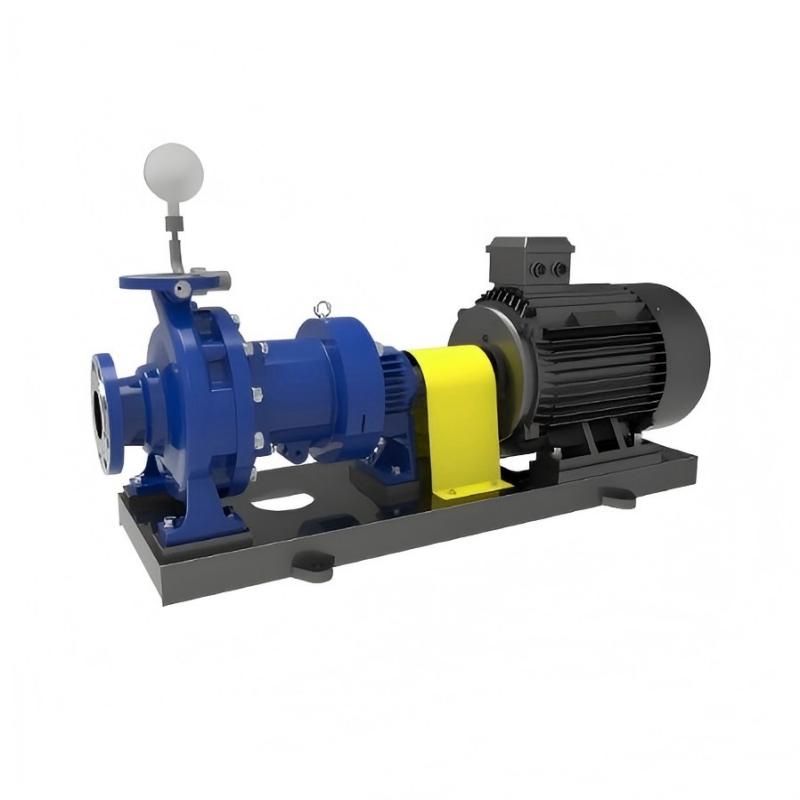
The Structure and Application of Magnetic Drive Centrifugal Pump 1.Structure of Metal Magnetic Drive Centrifugal Pump The magnetic drive centrifugal pump consists of four main components: the housing, rotor, connecting parts, and transmission system. It is available in two configurations: direct-coupled and non-direct-coupled. The direct-coupled design features a magnetic coupling (external magnet) directly connected to the motor shaft, eliminating the need for external shafts, rolling bearings, or coupling components, as illustrated in Figure 1-12. Figure 1-12 Schematic Diagram of Direct-Coupled Magnetic Drive Centrifugal Pump 1—Pump body; 2—Impeller; 3—Pump shaft; 4—Shaft sleeve; 5—Sliding bearing; 6—Pump cover;7—Inner magnetic rotor; 8—Isolation sleeve; 9—Outer magnetic rotor; 10—Electric motor The non-direct-connected magnetic drive centrifugal pump, also known as the standard magnetic drive centrifugal pump, features an external shaft with a magnetic coupling (external magnet) connected to the motor via a bearing housing and coupling. The schematic structure of this pump is illustrated in Figure 1-21. Figure 1-21 Schematic Diagram of Non-Direct-Coupled (Standard Type) Magnetic Drive Centrifugal Pump 1—Pump body (pump casing); 2—Impeller; 3—Sliding bearing; 4—Inner pump shaft; 5—Isolation sleeve; 6—Inner magnetic steel; 7—Outer magnetic steel; 8—Rolling bearing; 9—Outer pump shaft; 10—Coupling; 11—Electric motor; 12—Base (1) Shell section The shell part is composed of the pump body (pump shell), pump cover, isolation sleeve, etc. It bears all the working pressure of the pump. (2) Rotor section The rotor assembly consists of two main components: the rotating parts mounted on the pump shaft and those installed on the drive shaft. The pump shaft's rotating components include the impeller, bearings, thrust ring assembly, inner magnetic rotor, and the shaft itself, forming the rotor section that interfaces with the medium. The drive shaft's rotating parts comprise the outer magnetic rotor, rolling bearings, drive shaft sleeve, and the shaft itself, constituting the rotor section that contacts the air. (3) Connection section It is composed of connecting frame, bearing box and other parts, which play the role of connecting and supporting. (4) Transmission section The connection section refers to the coupling between the pump and the drive unit. Magnetic drive centrifugal pumps employ two connection methods: (1) connecting the pump's internal magnetic coupling to the drive unit's magnetic coupling (external magnetic coupling); (2) using a diaphragm-type extended coupling component to connect the pump's external shaft magnetic coupling to the drive unit. This design allows pump maintenance by simply removing the coupling's intermediate section bolts and diaphragm, eliminating the need to disassemble the drive unit for servicing, thus ensuring convenient maintenance. 2. Main Components and Their Functions of Metal Magnetic Drive Centrifugal Pump (1) Main Components of Metal Magnetic Drive Centrifugal Pump The key components of a metal magnetic drive centrifugal pump include: impeller, shaft, suction chamber, pump body (housing), isolation sleeve, bearing housing, and port ring. Some models may also incorporate guide vanes, induction wheel, and balance disc. The flow passages consist of the suction chamber, pump body (housing), and impeller, each serving the following functions. ① Inlet chamber The inlet chamber is located at the front end of the impeller inlet, where the liquid is drawn into the impeller through the suction port. It is required that the flow loss of the liquid passing through the inlet chamber be minimal, and the velocity of the liquid entering the impeller should be uniformly distributed. ②Impeller The rotating impeller converts energy by drawing in liquid, imparting pressure energy and kinetic energy to the liquid. The impeller is required to maximize energy transfer to the liquid while minimizing flow loss. (2) Functions of Key Components in Metal-Magnetic Drive Centrifugal Pumps ① Pump body (pump housing) The pump body, also known as the pump casing, comes in two types: axially split and radially split, serving as a component that withstands liquid pressure. Most single-stage pumps feature a volute casing, while multi-stage pumps typically use annular or circular casings. Its primary function is to contain the liquid within a defined space, channel the liquid ejected from the impeller's flow passages into discharge pipes, and convert part of the liquid's kinetic energy into pressure energy, thereby increasing its pressure. The pump body generally has the following three types: a. The volute pump body (shell) resembles a snail shell in appearance (Figure 1-22). Inside the volute, there are flow channels with gradually expanding cross-sections. The shape and dimensions of these channels significantly influence the pump's performance. Figure 1-22 Volute Pump Body (The arrow points to the volute passage with unequal cross-sections) b. Pump body (housing) with guide vane assembly. The pump body (housing) is a rotating structure, housing the impeller's outer component. The flow channel is surrounded by several guide vane structures. c. Double-layer pump body (shell) A pump body (shell) with an additional cylindrical outer casing is called a double-layer pump body (shell). ② impeller The impeller, a key component of a pump, drives liquid transfer through high-speed rotation. Typically consisting of three parts—the hub, blades, and cover plate—the impeller has two types of cover plates: the front cover plate on the inlet side and the rear cover plate on the opposite side. Magnetic drive centrifugal pumps convey liquids primarily through the action of the impeller installed within the pump body. The size, shape, and manufacturing precision of the impeller significantly influence the pump's performance. Based on structural configuration, impellers can be classified into three types: closed, open, and semi-open (Figure 1-23). a. enclosed impeller A disc impeller typically consists of a cover plate, blades, and a hub. The front cover plate is located on the suction side, while the rear cover plate is on the opposite side, with the blades positioned between them. There are 4 to 6 blades between the two cover plates, and these blades are generally backward-curved, as shown in Figure 1-23(a). Closed impellers are highly efficient and widely used, particularly for conveying clean liquids without solid particles or fibers. They come in two types: single-suction and double-suction. The double-suction impeller, as illustrated in Figure 1-24, is suitable for high-flow pumps and offers better cavitation resistance. b. open impeller The impeller has no cover plates on either side, with blades connected to the hub via stiffeners, as shown in Figure 1-23(b). This impeller design is simple and easy to manufacture, but has low efficiency, making it suitable for conveying liquids with high solid suspended matter or fibrous content. c. semiclosed-type impeller This impeller features only a rear cover plate, as shown in Figure 1-23(c). It is designed for transporting liquids prone to sedimentation or containing solid suspended matter, with an efficiency that falls between open and closed impellers. Figure 1-23 Impellers of Magnetic Drive Centrifugal Pump Figure 1-24 Double-suction Impeller There are two types of impeller blades for centrifugal pumps: straight blades and twisted blades. Straight blades are those whose entire width aligns parallel to the impeller shaft, as illustrated in Figure 1-23. The twisted blades feature a section that deviates from the impeller axis, as illustrated in Figure 1-25. For low specific speed impellers, the blades are circular with narrow flow channels, facilitating manufacturing. In contrast, high specific speed impellers employ wider flow channels, enabling easier twisting. Such blades enhance the pump's cavitation resistance, reduce impact losses, and ultimately improve overall efficiency. When the blade bending direction is opposite to the impeller rotation direction, it is called a backward-curved blade; otherwise, it is called a forward-curved blade. Due to the higher efficiency of backward-curved blades, they are generally used for impellers. ③ choma The sealing ring, also known as the gland, is typically mounted on the pump body and forms a minimal clearance with the impeller suction inlet's outer circumference (Figure 1-26). Since the liquid pressure inside the pump body exceeds the suction inlet pressure, the fluid tends to flow toward the impeller suction inlet. The primary function of the sealing ring is to prevent liquid leakage between the impeller and pump body. Additionally, it serves as a friction-bearing component. When excessive wear occurs in the clearance, replacing the sealing ring prevents the impeller and pump body from being scrapped, thereby extending their service life. Consequently, the sealing ring is classified as a pump's wear-prone component. The clearance dimension between the sealing ring and the impeller suction inlet's outer circumference is generally determined by the diameter of the impeller gland. Figure 1-25 Impeller with Twisted BladesFigure Figure 1-26 Schematic Diagram of Wear Ring (Seal Ring) ④ Isolation sleeve In a magnetically driven centrifugal pump, the isolation sleeve primarily functions as a shaft seal, serving as the sole component that ensures leak-proof operation. Unlike conventional centrifugal pumps, the rotating shaft is not externally protruding from the stationary pump housing. Instead, the isolation sleeve replaces the traditional shaft seal, effectively preventing both high-pressure fluid leakage and air ingress into the pump chamber (as illustrated in Figure 1-27). This design rationale explains the inclusion of a sealing mechanism in such pumps. The shaft and pump housing are physically separated by the isolation sleeve, which replaces the conventional shaft seal assembly. ⑤ Magnetic Coupling A magnetic coupling consists of an inner magnet (featuring a magnet holder and a magnet sleeve) and an outer magnet (with a magnet holder). The isolation sleeve, positioned between the inner and outer magnets (Figure 1-28), is a key distinguishing feature of magnetic pumps and serves as their core component. The magnetic coupling's structure, magnetic circuit design, and material selection of its components directly impact the pump's reliability, magnetic drive efficiency, and service life. Figure 1-28 Schematic Diagram of Magnetic Coupling Structure 1—Outer magnetic base;2—Outer magnetic steel block;3—Isolation sleeve;4—Inner magnetic steel enclosure;5—Inner magnetic steel block;6—Inner magnetic base L — Length of magnetic steel block;a — Coating thickness;b — Thickness of isolation sleeve;c — Air gap a.Internal magnetic steel The inner magnetic steel is bonded to its base with adhesive. To isolate the inner magnetic steel from the medium, a protective sleeve must be applied to its exterior. The sleeve is available in two types: metal and plastic. Metal sleeves are welded, while plastic sleeves are injection-molded (when the material is metal, non-magnetic austenitic stainless steel must be used). b.External magnet The outer magnet and the outer magnet seat are connected by adhesive. c.Isolation sleeve The isolation sleeve, also known as the sealing sleeve, is positioned between the inner and outer magnets to completely isolate them, with the medium enclosed within the sleeve (Figure 1-29). Figure 1-29 Schematic Diagram of Cylindrical Magnetic Drive Structure 1—Outer rotor;2—Outer magnetic steel;3—Inner magnetic steel;4—Inner rotor;5—Isolation sleeve The thickness of the isolation sleeve is related to the working pressure and operating temperature. If it is too thick, the gap between the inner and outer magnets will increase, which will affect the efficiency of magnetic drive. If it is too thin, the strength will be affected. There are two kinds of isolation sleeves: metal and non-metal. The metal isolation sleeve has eddy current loss, while the non-metal isolation sleeve has no eddy current loss. ⑥ sleeve bearing The pump shaft of a magnetically driven centrifugal pump is supported by a sliding bearing. Since the sliding bearing relies on the transported medium for lubrication, it should be fabricated from materials with excellent wear resistance and self-lubricating properties. Commonly used bearing materials include silicon carbide, ceramics, graphite-based materials, and polytetrafluoroethylene (PTFE) filled composites. The lubrication of sliding bearings relies on their own fluid flow, which requires the bearings, bushings, and thrust discs to possess excellent self-lubrication, wear resistance, and corrosion resistance. For instance, both SSiC and YWN8 exhibit outstanding wear resistance, corrosion resistance, and self-lubrication properties, with SSiC having higher relative hardness than YWN8. When paired with thrust bearings, the combination of soft and hard materials forms an optimal friction pair, significantly extending bearing service life. Practical tests have shown that the service life of paired bearings made from these materials (SSiC and YWN8) can be up to 10 times longer than that of graphite bearings or SiC bearings paired with the same material. As critical components in magnetic pumps, extending the service life of sliding bearings directly enhances the overall lifespan of the magnetic pump. Therefore, material selection is crucial for ensuring stable and long-term operation of magnetic pumps. ⑦ equalizer In a magnetically driven pump, the forces acting on both sides of the impeller are unequal, as shown in Figure 1-30. When the pump is momentarily started by the drive mechanism, an axial force is exerted on the impeller toward the suction side. If this axial force is not eliminated, axial movement of the rotating parts will occur, leading to wear, vibration, and overheating, which prevents the pump from operating normally. Therefore, a balancing device must be used to prevent axial movement. The most common types of axial balancing devices include balancing holes, balancing pipes, and balancing discs. Figure 1-30 Schematic Diagram of Pump Axial Force a. balance hole The same sealing ring is added to the rear cover of impeller, and several holes are opened on the rear cover (balance holes) to make the pressure at the rear cover equal to the suction inlet pressure, so as to balance the axial force. b. balance pipe A pipe is connected to the pump body and leads to the suction inlet, ensuring pressure balance on both sides of the impeller. These two devices have simple structures but may cause liquid backflow, reducing efficiency. Additionally, 10%-25% of the axial force remains unbalanced, typically requiring a thrust disk to absorb the residual axial force. c. balance disk Figure 1-31 illustrates a schematic of a balance disc assembly, primarily used in multi-stage pumps where it is fixed to the final-stage impeller on the same shaft. An axial clearance exists between the balance disc and the pump body. During operation, high-pressure liquid flows through this clearance into the balance chamber on the right side of the balance disc. The balance chamber is connected to the suction inlet, maintaining equal pressure. This creates a pressure differential across the balance disc, with the opposing thrust and axial forces counterbalancing each other. The pump's rotating components can move laterally, and the balance disc automatically maintains equilibrium during operation. Additionally, methods such as using double-suction impellers or symmetrically arranged impellers can also help balance partial axial forces. Figure 1-31 Schematic Diagram of Balance Disc Device 1—Final-stage impeller;2—Balance chamber;3—Axial clearance;4—Balance disc;5—Pump shaft
LEO delivers critical pump cooling system solutions for ADNOC's ultra-large gas field in the Middle East Energy security is the cornerstone of people's livelihood. In recent years, China has actively promoted the establishment of a new global energy cooperation framework, advocating for global energy transition through technology sharing and supply chain coordination. In this process, how to ensure the reliable operation of large-scale energy infrastructure through international cooperation and technological innovation has become a key support for implementing the strategy. Energy security is the cornerstone of people's livelihood. In recent years, China has actively promoted the establishment of a new global energy cooperation framework, advocating for global energy transition through technology sharing and supply chain coordination. In this process, how to ensure the reliable operation of large-scale energy infrastructure through international cooperation and technological innovation has become a key support for implementing the strategy. Recently, the pump industry successfully delivered the critical chilled water pump units for the ultra-large gas field project of Dalma, a subsidiary of global energy giant ADNOC. These high-specification, highly reliable smart fluid solutions have been deployed to safeguard this core component of the world-class energy project. This is also a brilliant practice of China's high-end manufacturing demonstrating its innovative strength, deeply integrating into and contributing to the global energy transition process. Project context Established in 1971, Abu Dhabi National Oil Company (ADNOC) is a diversified energy and petrochemical group wholly owned by the Abu Dhabi government, ranking 128th in the global brand value list. As a cornerstone of the UAE's energy strategy, ADNOC operates under the guidance and vision of the national government, dedicated to advancing the country's development and ensuring global energy security. The Darmar project, part of the Jassan concession—a world-class offshore acid gas field development block—holds strategic importance for ADNOC's goal of achieving UAE's natural gas self-sufficiency. To support the infrastructure development of the Darmar mega natural gas field project, the pump industry provides a chilled water pumping system, which is a core component ensuring reliable cooling for critical process flows and facility operations. LEO Solution To meet the stringent operational standards of the Dharma project, the pump industry successfully developed five sets of LEP-end suction centrifugal chillers, tailored to the project's multiple requirements. The system integrates HRC couplings, protective covers, and a customized carbon steel base, having undergone rigorous multi-stage testing to meet ADNOC's performance and specification requirements. 1.Overcoming the technical barriers of extreme sealing Given the ADNOC mechanical seal specifications that far exceed industry standards, the technical team conducted a comprehensive evaluation and validation of the sealing components' material compatibility, structural design, and ultimate performance. By seamlessly integrating rigorously certified sealing systems into the pump assembly, the core process achieves long-term, leak-free stability under high-pressure and corrosive media conditions, demonstrating cutting-edge technical integration to meet exceptional demands. 2.Upgrade the custom oil collection tray Traditional oil collection trays lack the capacity and functionality required for effective leakage control and environmental protection. To fundamentally address the challenges of leakage management and environmental conservation, we have innovatively designed and manufactured a low-carbon steel oil collection tray integrated with a drainage valve. This design enables safe and efficient liquid discharge, significantly enhancing operational safety. It demonstrates our R&D capability in resolving customers' core pain points through customized engineering solutions. 3.Commitment to Quality throughout the Life Cycle With SGS experts present throughout the process, the factory acceptance test (FAT) covering hydraulic performance, mechanical operation, and material verification was successfully executed. All test items passed on the first attempt, with transparent data and outstanding results. The high-standard delivery earned the customer's high trust in the product's superior quality and lean quality management system. 4.Build complete traceable technical archives Guided by the principle of 'traceable process and full specification compliance,' we systematically developed, reviewed, and timely submitted a complete documentation package. This package includes product design, third-party test reports, material quality certificates, and detailed technical Q&A, ensuring full traceability and verification of all specifications throughout the equipment's lifecycle from design to delivery. Flow Towards The Future The successful completion of the Darma project stands as a powerful testament to Pump Industry's comprehensive capabilities in the world's leading energy engineering sector. This achievement not only demonstrates that its products and services fully comply with the most stringent international oil and gas industry standards, but also solidifies its position as a long-term trusted partner for global energy leaders like ADNOC. Seeking dreams across mountains and seas, unaware of their distance; the road ahead is long, but we shall advance together and prosper together. As one of China's top 500 manufacturing enterprises, in the future, we will continue to delve deeper into the energy sector, committed to providing global customers with safer, more efficient, and greener smart fluid integrated solutions. Hand in hand with global partners, we will jointly promote the high-quality and sustainable development of the energy industry, building a beautiful world of intelligent flow and shared prosperity.
Maintenance photos of single-stage horizontal centrifugal pump
What are the common misconceptions about water pump usage? A water pump is a mechanical device designed to convey liquids or pressurize them. It transfers mechanical energy from the prime mover or other external energy sources to the liquid, thereby increasing its energy. It is primarily used for transporting liquids including water, oil, acidic/alkaline solutions, emulsions, suspensions, and liquid metals. Here are some common misconceptions about water pump usage. ● High-head Pump Used for Low-head Pumping Many people believe that the lower the pumping head, the less the motor load. Under the misleading of this wrong understanding, the pump is often selected with a high head. For centrifugal pumps, once the model is determined, the power consumption is directly proportional to the actual flow rate. As the head increases, the flow rate decreases, meaning higher head results in lower flow and reduced power consumption. Conversely, lower head corresponds to higher flow and greater power demand. To prevent motor overload, the actual pumping head must not fall below 60% of the rated head. Using high head for low head applications risks motor overheating and potential burnout. For emergency use, install a flow control valve on the discharge pipe (or block the outlet with wooden blocks) to reduce flow and prevent overload. Monitor motor temperature – if overheating occurs, immediately reduce discharge flow or shut down the pump. A common misconception is that blocking the outlet increases motor load. In fact, high-power centrifugal pump units standardly feature discharge valves. To minimize startup load, close the valve first and gradually open it after motor startup – this is the principle behind proper operation. ●Pumping water with large-diameter pumps using small-diameter pipes Many users believe this can increase the actual head, but the actual head of a pump is calculated as total head minus head loss. When the pump model is determined, the total head is fixed. The loss head mainly comes from the resistance of the pipeline. The smaller the diameter of the pipeline, the greater the resistance, and the larger the loss head. Therefore, after reducing the diameter of the pipeline, the actual head of the pump will not increase, but decrease, resulting in a decrease in the efficiency of the pump. Similarly, when the small-diameter pump is used to pump water through a large-diameter pipe, the actual head of the pump will not decrease. Instead, the loss head will be reduced due to the decreased pipeline resistance, thereby increasing the actual head. Some users argue that using larger pipes for small-diameter pumps inevitably increases motor load. They believe that a larger pipe diameter would exert greater pressure on the pump impeller, thereby significantly increasing motor load. However, it is important to note that liquid pressure is solely determined by the head height and not by the pipe's cross-sectional area. When the head is constant and the pump impeller dimensions remain unchanged, the pressure acting on the impeller remains consistent regardless of the pipe diameter. While a larger pipe diameter reduces flow resistance and increases flow rate, it also moderately raises power consumption. Nevertheless, as long as the pump operates within its rated head range, it can function normally with any pipe diameter. Moreover, this approach helps minimize pipeline losses and improve pump efficiency. ● When installing the water inlet pipe, the horizontal section should be level or slightly upward. Error! This will cause air accumulation in the water inlet pipe, reducing the vacuum level of the water pipe and pump, which lowers the pump's suction head and decreases water output. The correct approach is to ensure the horizontal section slopes slightly toward the water source, avoiding flatness or upward curvature. ● The water intake pipeline uses many elbows. Excessive use of elbows in the water supply pipeline increases local water flow resistance. Elbows must be installed in a vertical direction, and horizontal bends are prohibited to prevent air accumulation. ● The water inlet of the pump is directly connected to the elbow. Error! This will cause uneven water distribution when the flow passes through the elbow into the impeller. When the inlet pipe diameter exceeds the pump's intake, install an eccentric reducer. The planar section of the eccentric reducer should be installed on top, while the inclined section should be installed below. Otherwise, air may accumulate, leading to reduced water discharge or failure to draw water, accompanied by impact noises. If the diameter of the water inlet pipe is equal to that of the water inlet of the pump, a straight pipe should be added between the water inlet of the pump and the elbow, and the length of the straight pipe should not be less than 2-3 times the diameter of the water pipe. ● The bottom section of the inlet pipe with a bottom valve is not vertical. Error! If installed this way, the valve cannot close automatically, causing a leak. The correct installation method is: the bottom valve-equipped inlet pipe should ideally be installed vertically at the lowest section. If vertical installation is not feasible due to topographical constraints, the pipe axis should form an angle of at least 60° with the horizontal plane. ● The inlet position of the water pipe is incorrect. (1) The distance between the inlet of the water intake pipe and the bottom or wall of the intake pool is less than the diameter of the inlet. If there are silt or other contaminants on the pool bottom, and the distance between the inlet and the pool bottom is less than 1.5 times the diameter, it may result in poor water intake during pumping or the suction of silt and debris, leading to blockage of the inlet. (2) When the water intake depth of the inlet pipe is insufficient, it may cause vortex formation around the water surface of the inlet pipe, thereby affecting water intake and reducing water discharge. The correct installation method is: for small and medium-sized pumps, the water intake depth shall not be less than 300–600 mm; for large pumps, it shall not be less than 600–1000 mm. ● The outlet pipe is above the normal water level in the discharge tank. If the outlet is above the normal water level of the discharge pool, the pump head may increase but the flow rate will decrease. If the outlet must be higher than the water level due to terrain constraints, a elbow and a short pipe should be installed at the pipe opening to form a siphon, thereby reducing the outlet height.
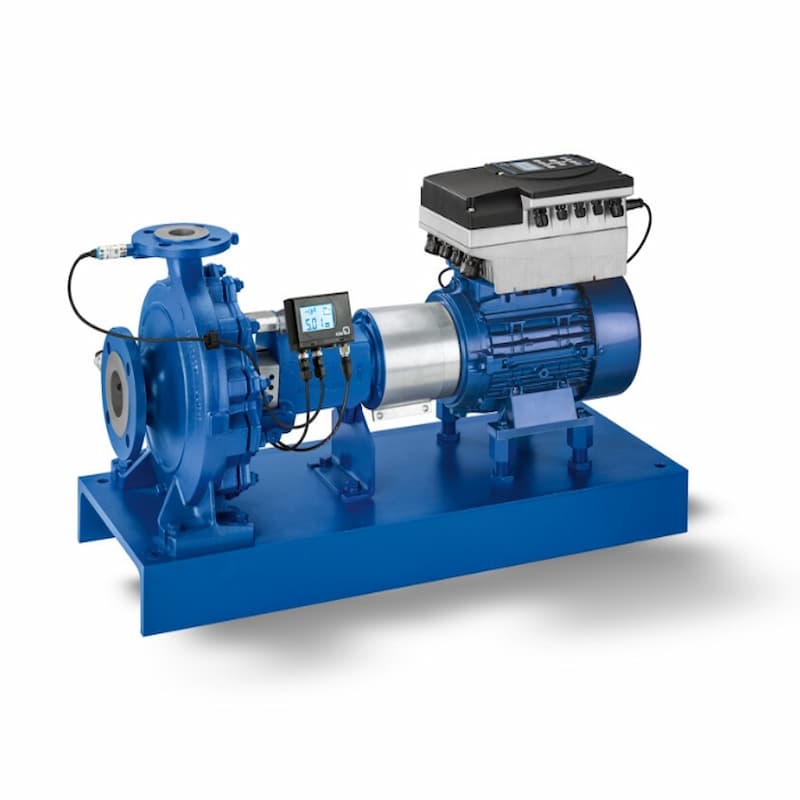
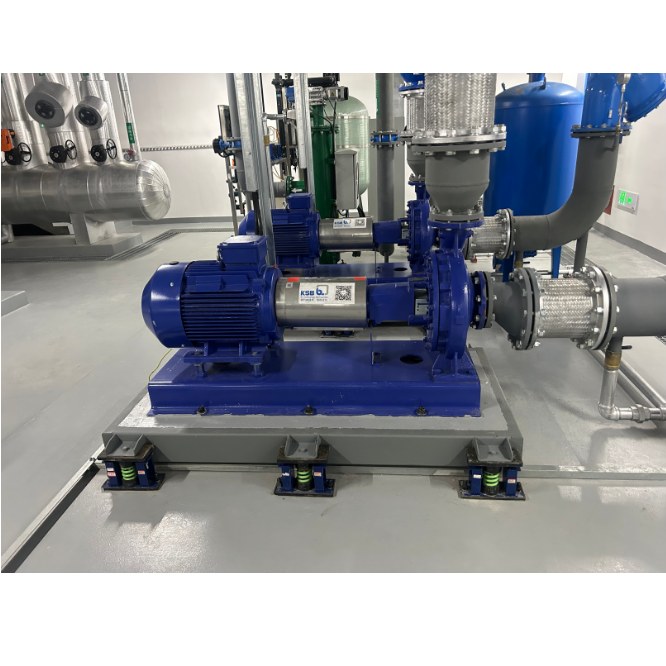
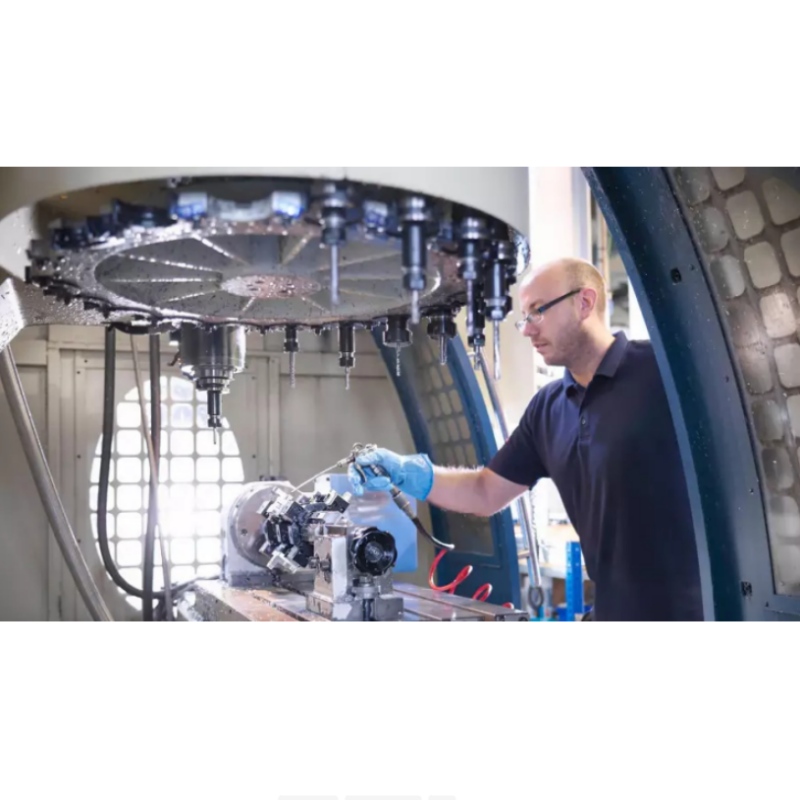
Application of KSB pump in mechanical manufacturing Machine building Between Tradition and Progress: Be Prepared to Meet Any Challenge with KSB Products Valves and pumps for mechanical manufacturing must not only meet the most stringent requirements but also be economically viable. Facing the Challenge, Looking to the Future The application of mechanical manufacturing imposes extremely stringent requirements on pumps and valves. The media used, such as high-temperature engine oil, coolant lubricants containing chips, production water with solid components, and treated boiler water, all demand materials with exceptional properties. The precision and reliability of machine tool manufacturing, hot oil system and steam boiler system are very high. Therefore, the characteristics and performance of valve and pump in mechanical manufacturing must match the medium. The combination of market demand and production requirements. The field of mechanical manufacturing has long faced economic and technical challenges: the process of internationalization, new markets in emerging countries, and new competitors have led to increasing competitive pressure. Technological trends like digitalization and Industry 4.0 are exerting growing influence on industries. Only enterprises that manage operational costs effectively and embrace digital transformation will gain a competitive edge over rivals. KSB products for mechanical manufacturing Capable of addressing any technological or economic challenges As a seasoned market player, KSB delivers products and services that meet the highest technical and economic standards in the machinery manufacturing industry. KSB's pumps and valves are adaptable to specific conditions, ensuring efficient operation under all load scenarios. Furthermore, their high-quality components guarantee exceptional process reliability, helping maintain consistent product quality. The KSB pump for mechanical manufacturing employs innovative technology, significantly reducing operational costs and boosting business profits. The highest quality products are required to meet the highest standards. From direct-connected pumps, standard pumps, and high-pressure pumps to submersible pumps and cooling lubricant pumps, KSB delivers a comprehensive product portfolio to meet your needs and requirements in a flexible and customized manner. KSB pumps for mechanical manufacturing can be customized according to the medium requirements, such as using specialized mechanical seals, pump body sealing rings, and diverse material combinations. This ensures smooth medium pumping and reliable production processes. Beyond this, pumps can be equipped with automated and drive solutions such as PumpMeter, KSB Guard, or PumpDrive. These smart products monitor pump performance, ensure energy-efficient operation of your pump system, and promptly alert you to necessary maintenance actions. As a result, digital solutions enhance process transparency, prevent unplanned downtime, and reduce operational costs. KSB delivers both specialized niche solutions and comprehensive system solutions. The high-quality products for mechanical manufacturing are perfectly complemented by KSB SupremeServ's premium service. KSB offers a wide range of products for mechanical manufacturing applications: Standard Pump/Direct-Connection Pump (Chemical Industry Standard Pump) process pump high lift pump centrifugal pump slurry pump self-priming pump cooling lubricant pump Merit : A diverse product portfolio enables flexible, personalized solutions. wear resistant material Consistently high-quality products ensure exceptional process reliability Automation and drive solutions for energy-efficient operation and process transparency Reducing Total Operating Cost by Innovative Technology Comprehensive Service – From Assembly, Maintenance to On-Site Repair Usage: hot oil system steam boiler system machine tool building The media include: High-temperature oil cooling lubricant with chips Production water containing solid matter Treated boiler water Pumps for Mechanical Manufacturing: Direct-coupled Horizontal Single-stage Centrifugal Pump Horizontal Single-stage Centrifugal Pump with Flexible Coupling Vertical Multistage Centrifugal Pump Sectional Multistage Horizontal or Vertical Centrifugal Pump Back-pullout Horizontal Centerline-split Centrifugal Pump
Analysis of the Reason for the Pressure Fluctuation of the Balance Pipe of the Feed Water Pump of the Multi-stage Boiler Function of the balancing pipe for boiler feed pump: The balancing pipe is a connecting pipe from the pump's outlet seal ring to its inlet end. Its primary function is to balance the axial thrust of the pump, reduce the axial movement of the rotor, and prevent friction between the impeller and the casing. During operation, the boiler feed pump discharges high-pressure liquid from the impeller outlet. A portion of this liquid flows behind the impeller, equalizing the pressure there with the outlet. Meanwhile, the front cover plate acts as the suction end, maintaining low pressure. This creates a significant pressure differential across the impeller, generating an axial thrust parallel to the shaft that directs the rotor toward the suction side. In severe cases, this may cause friction or impact between the impeller and pump casing, jeopardizing safe operation. Therefore, balancing measures must be implemented to mitigate these effects. Diagram of the structure of the balance pipe of boiler feed pump Multiple methods exist to balance axial thrust, including dual-suction impellers, symmetrically arranged impellers (for multi-stage pumps), and components like balance holes, balance discs, or balance drums. The balance pipe serves as a primary method to equalize axial thrust by diverting the pressure fluid behind the impeller to the inlet side, thereby achieving pressure equilibrium. While structurally simple, this approach cannot fully balance axial thrust. The residual axial thrust must be absorbed by dedicated thrust bearings and balance devices. The principle of balance disc is similar to that of thrust bearing in steam turbine, and the balance pipe is similar to the return oil pipe of thrust bearing. Analysis of the Pressure Fluctuation of the Balance Pipe of Boiler Feed Water Pump 1. As a balance pipe, its pressure should remain relatively stable unless it becomes clogged or leaks. 2. The balance pipe is used to eliminate axial thrust. When the pump outlet valve is closed or the downstream line is blocked, the pressure in the balance pipe becomes high; during pump siphoning, the pressure in the balance pipe is low. Under normal conditions, the pressure remains constant. 3. The balancing tube pressure of the high-pressure feed pump is slightly higher than the inlet pressure. If the pressure increases, it indicates that the gap between the balancing drum and its sleeve has widened. If the pressure reaches 2-3 times the inlet pressure, it is advisable to disassemble and inspect the system. 4. The pressure of the balance pipe is changed greatly because of the wear of the sealing ring, the balance disc and other wear parts. 5. The pressure difference of the balancing tube changes due to inter-stage leakage and the motor's frequency conversion (compared with the original speed). 6. When the external import pressure changes, the pressure difference of the balance pipe fluctuates accordingly.
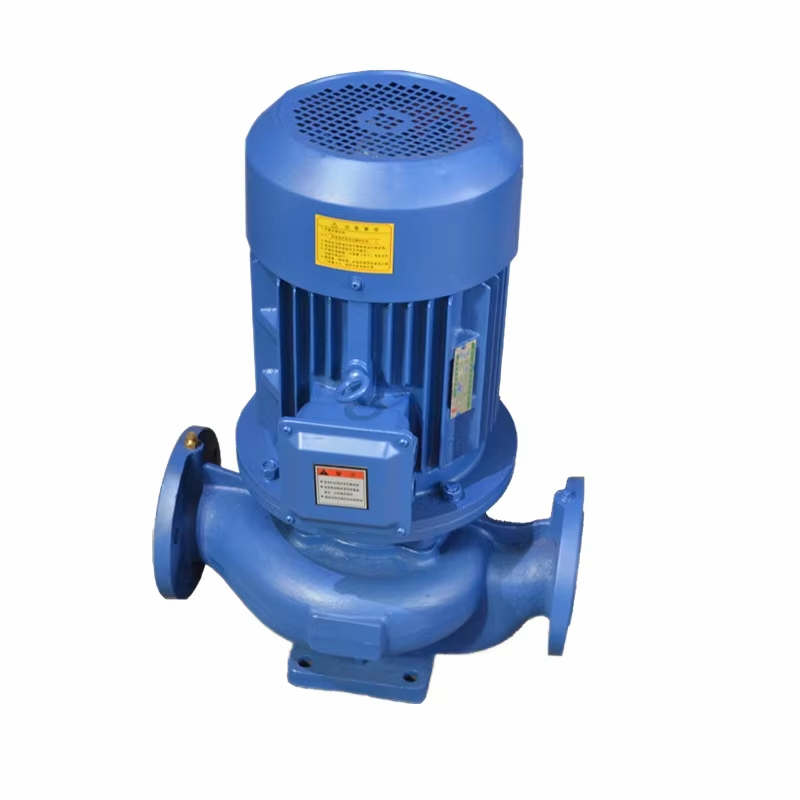
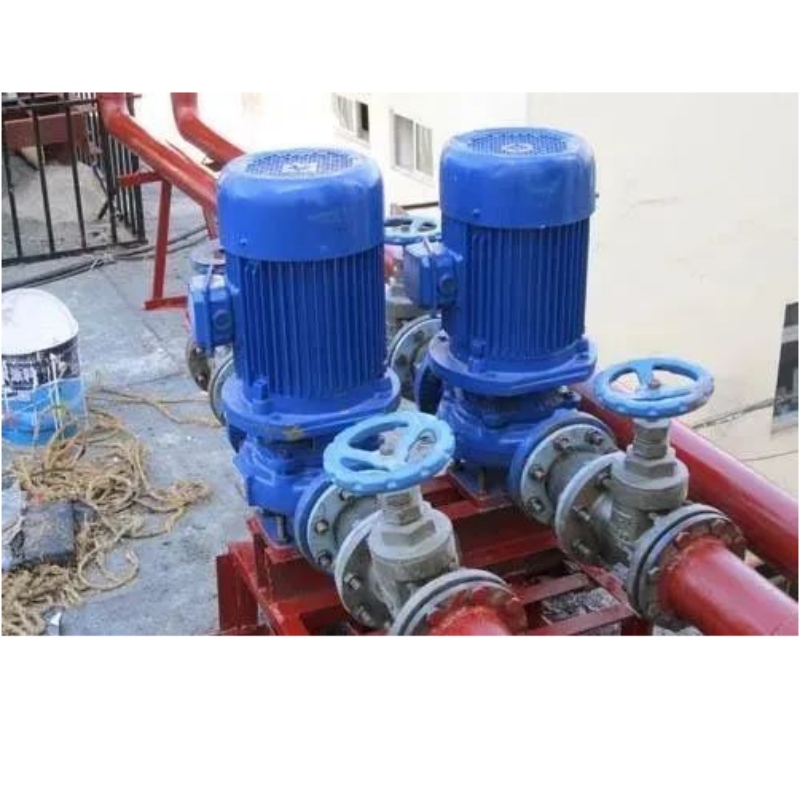
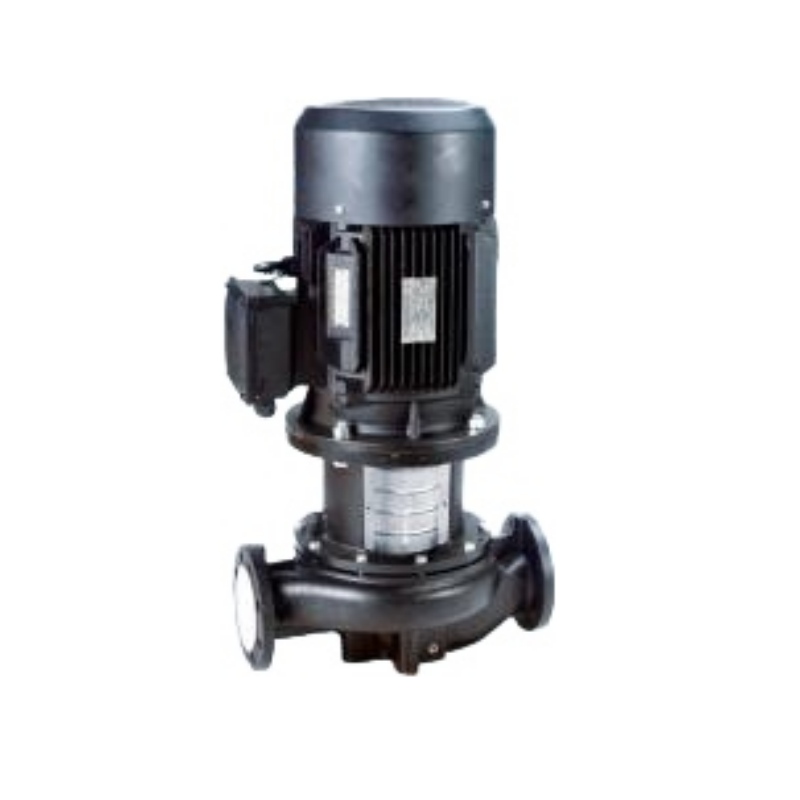
TD-Pipeline Circulation Pump The TD-type pipeline circulation pump is a single-stage centrifugal pump featuring advanced hydraulic model design. Its optimized impeller structure enhances efficiency while reducing energy consumption, enabling the pump to deliver higher flow rates and greater head with lower power input during operation. Equipped with standard motors and mechanical seals, the pump adopts a top-pullout design for easy maintenance without affecting the pipeline system. Ⅰ.Performance II. Structure The TD32~TD150 pump series features a single-suction, easy-to-disassemble design. The pump shaft and motor shaft are securely connected via a clamping-type coupling, with an integrated mechanical seal installed internally. This configuration reduces the pump's overall height and drive spacing, decreases the product's weight, and lowers production costs. The compact design ensures easy installation and minimal space occupation, making it ideal for complex pipeline systems. Maintenance and replacement of the mechanical seal can be performed without disassembling the pump, significantly enhancing the pump's sealing performance. The TD200~TD250 pump series features a single-suction, disassemblable design. Its shafts are clamped together with a coupling for secure locking, and the pump incorporates a modular mechanical seal. This eliminates the need to disassemble the motor during seal replacement or maintenance, enabling single-person operation. The TD300~TD350 pump series features a dual-suction impeller design. Its symmetrical structure effectively balances axial forces, ensuring smooth operation and significantly boosting efficiency—up to 84%. With high energy efficiency and low noise, it is ideal for reliable transportation of large-volume fluids. The whole series adopts the clamping type coupling locking structure III. APPLICATION TD pump is a versatile product designed to handle a wide range of media, from tap water to industrial liquids. It is primarily used for liquid transportation, pressurization, and circulation. for instance : HVAC (Heating, Ventilation, and Air Conditioning) systems coolant passage hot water system industrial liquid conveyance water supply TD pumps are primarily used in HVAC systems, with September to November being the peak sales season. Many customers tend to purchase only one pump, often overlooking essential accessories like base plates, rain covers, reverse flanges, and anchor bolts. Missing any of these components requires on-site solutions, with base plate shortages being particularly troublesome. TD pumps are widely used in various applications. For example, Lao Wang frequently sees them in HVAC systems, light wastewater treatment equipment, cooling systems, and boiler installations.
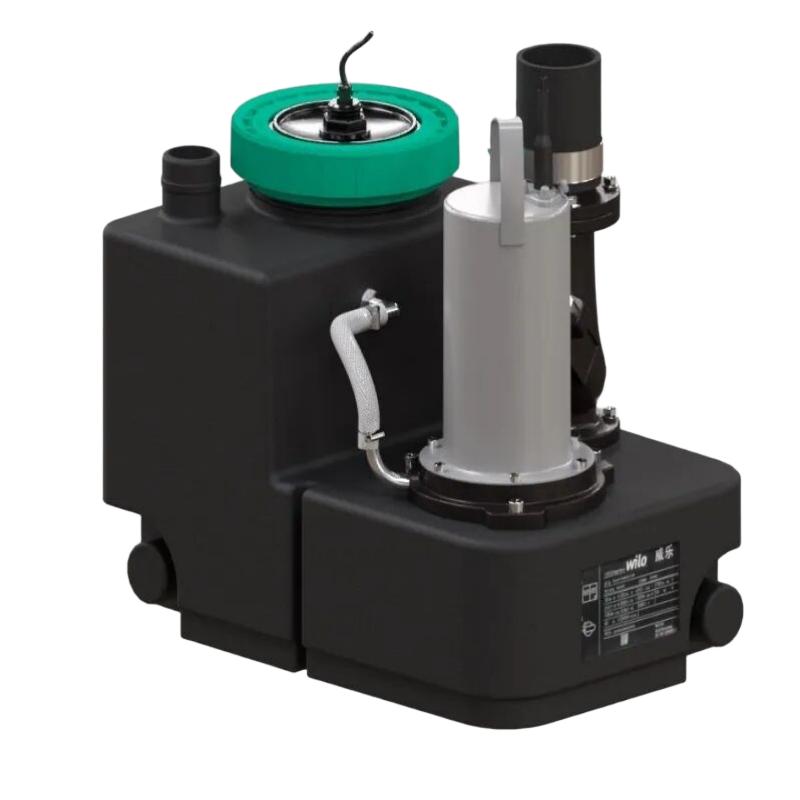
The Wilo-Drainlift SANI family of sewage lift systems welcomes a new addition! In the field of modern building drainage, the space utilization, operation reliability and intelligence level become the core criteria to measure the quality of equipment. Whether renovating a villa's basement bathroom, multi-bathroom apartments, or spaces like kitchens, laundry rooms, and tea rooms, the sewage lift system efficiently collects and drains domestic wastewater, preventing common issues such as odors, backflow, and clogging. For urban residential renovations, building refurbishments, or new civil projects, this system offers a complete solution—from individual bathrooms to centralized drainage systems—ensuring every living space is cleaner, more comfortable, and more secure. For years, Wilo has been dedicated to advancing sewage lift technology. The Wilo-Drainlift SANI series sewage lift systems have earned the trust of numerous users for their high reliability and flexible installation. Whether in urban villas, apartment residences, or small commercial spaces, the SANI series ensures the stable and efficient operation of every drainage system. With the growing diversity of drainage needs, we're thrilled to introduce two new additions to our star product family ⬇ ✅Wilo-Drainlift SANI CUT series Master of Double Shear Cutting for High Impurity Sewage ✅ Wilo-Drainlift SANI XS A Dexterous Solution for Stable Drainage with Minimal Volume Wilo-Drainlift SANI-XS/CUT series compact sewage pumping station Compact, lightweight, and single-pump/cut-off unit Application of Sewage Lift System in Independent/semi-independent Residential House and Apartment Wilo-Drainlift SANI-CUT series Complex sewage can also be discharged smoothly with a single pump In renovation projects of basement toilets, commercial restrooms, or sewage pipelines with limited diameters, toilet paper, solid waste, and fibrous debris often cause blockages and maintenance issues. The Wilo-Drainlift SANI-CUT series simplifies sewage management with its patented suction port design, dual shearing blades, and ultra-compact tank volume – all combined in a powerful system that makes drainage a breeze. ✅ Don't worry about the blockage. Even when sewage contains large amounts of toilet paper and debris, the powerful cutting function of Wilo-Drainlift SANI-CUT can efficiently shred and discharge them. ✅ Install as you please Multi-inlet design enables flexible connection to both walls and floors ✅ The diameter of the tubules is also not affected. Even with DN32 diameter drainage pipes, it still maintains high head capacity, making it ideal for long-distance discharge or spaces with significant vertical elevation differences. ✅ 24-hour security protection Automatic thermal protection and independent alarm system provide instant alerts for anomalies, ensuring worry-free operation Product Details Double-shear cutting impeller with strong solid crushing capability The maximum head can reach 42 meters. Supports up to 5 water inlets Built-in thermal protection and fault alarm Complies with EN 12050 standard Flow Head Curve Wilo-Drainlift SANI-XS Stable drainage in confined spaces If you're struggling with drainage design for renovation projects or limited space, the Wilo-Drainlift SANI-XS is your ideal solution. In basement apartments, villa kitchens, and office breakrooms, limited equipment space often results in restricted installation and maintenance challenges. The SANI XS delivers a truly worry-free drainage experience with its compact size and smart design. ✅ maximize space utilization The compact structure, measuring just 0.5 meters in length, can be easily installed even in extremely narrow equipment rooms. ✅ Simple installation and maintenance Multiple optional water inlets and transparent inspection windows eliminate the need for cumbersome disassembly, allowing real-time status checks. ✅ High solid content wastewater is also safe Optimized suction port and anti-clogging design significantly reduce maintenance frequency ✅ Smart adjustment for greater comfort The two optional multi-functional control cabinets feature delayed shutdown and remote monitoring, flexibly accommodating diverse drainage requirements. Product Details Compact dimensions: 500×320×458mm³ Large channel impeller with 40mm diameter Corrosion-resistant high-strength integral injection-molded hydraulic component Two Control Cabinets: Basic and Support Advanced WiFi/Modbus models EN 12050 certification Flow Head Curve From residential to commercial The SANI family with full coverage With the addition of SANI CUT and SANI XS, the SANI family has become one of the few full product lines in the industry, offering one-stop solutions for diverse scenarios. ✅ Drainage from the basement bathroom in the villa ✅ Apartment with centralized drainage for multiple bathrooms ✅ Commercial building catering sewage ✅ Drainage of small volume modified space No matter what sewage challenges you face, Weile offers tailored solutions to make your drainage system more reliable, smarter, and hassle-free. Wilo-Drainlift SANI series sewage lift system: Smart and hassle-free drainage for every household .
Wilo Solar Pump Irrigation Technology Boosts Food Security and Sustainable Agriculture In the vast rural areas of Indonesia, agriculture is the foundation of countless families. However, challenges like aging infrastructure, unstable power grids, and water scarcity during dry seasons have long hindered efficient irrigation in farmlands, severely impacting farmers' harvests and livelihoods. This is particularly evident in Karang Raja village of South Sumatra Province, where villagers once relied solely on the monsoon season for rice cultivation. Even when attempting two-season farming, they often ended up with no harvest due to water shortages. Now, this situation is being completely changed... Wilo Solar Pump Irrigation Technology Facilitates Sustainable Agricul–tural Development With corporate social responsibility (CSR) support from PT Bukit Asam Tbk, the Wilo Indonesia team partnered with local communities to implement a solar-powered smart irrigation system (PLTS). This project not only ensures year-round water supply for 35 hectares of rice fields in Karang Lajah Village but also enables villagers to achieve two to three annual harvests, significantly enhancing food security and economic income. From "Relying on the Weather" to "Sunshine Empowerment" Located in a remote area with inadequate power grid coverage, Karangraj village struggled with unstable operation of traditional electric pumps. To address this challenge, Weiluo provided a complete solar-powered irrigation pump solution, featuring high-efficiency solar pumps, smart control systems, and supporting civil engineering works. The system operates entirely without municipal power, harnessing abundant local sunlight to drive the pumps and deliver river water or groundwater precisely to every farmland. "Thank God, thanks to this solar power system, we can now cultivate our rice fields twice a year, or even three times," said an excited local villager. This not only showcases Welle's cutting-edge water pump technology and irrigation solutions, but also vividly embodies the concept of' sustainable development'. Wilo Intelligence: Injecting Resilience into Indonesian Agriculture Wilo fully understands that in Southeast Asia's climate with frequent changes and uneven infrastructure, agricultural irrigation cannot rely solely on' water availability 'but requires a systematic solution that is' reliable, efficient, energy-saving, and easy to maintain.' To address this, our solar pump systems, widely deployed across multiple locations in Indonesia, feature modular design and smart control technology, offering the following core advantages: ✅Energy independence: no reliance on the grid, especially in remote rural areas ✅Stable water supply: Irrigation flows are maintained even in dry seasons, preventing crop wilting ✅Water-efficient: Reduce water waste through precision control, using every drop of water where it counts ✅Low O&M cost: Solar system has long life, quiet operation and easy maintenance ✅Community empowerment: Wilo also organized specialized training to guide villagers in operating and maintaining the equipment, ensuring the system's long-term effective operation. As championed by Wilo's global Water Responsibility initiative, sustainable food production begins with responsible water management. The Karangraj project exemplifies this principle at the grassroots level. "We are proud of this comprehensive solution," said the Wilo Indonesia team. "This is not just a delivery of equipment, but a long-term investment in agricultural resilience, community well-being, and national food security." From one village to the whole country: A Replicable Model of Green Agriculture The success story of Karang Lajah has become a benchmark for other agricultural regions in Indonesia to emulate. Wilo has implemented similar solar-powered irrigation systems across multiple provinces, helping farmers overcome the challenge of weather-dependent farming. As climate change intensifies and water scarcity grows, such clean energy-driven smart agricultural infrastructure will become a crucial pillar in ensuring food security in Southeast Asia.
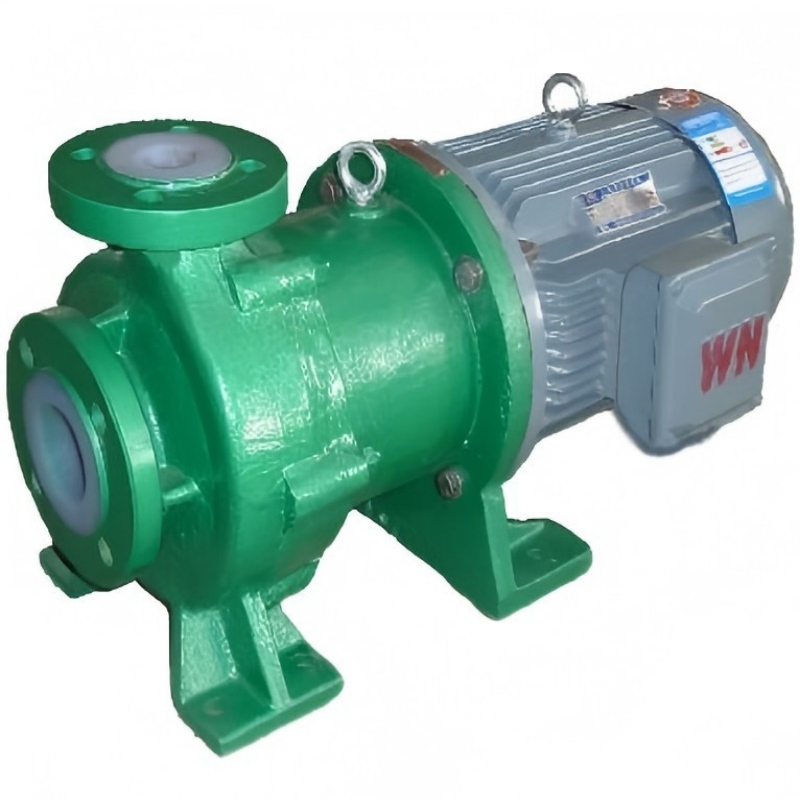
CQB catena of fluorine plastic magnetic force pumps Using: The product is widely used for industry of chem. Industry、making acid、making alkali、smelting、thulium 、agrochemical 、dyestuff、medicament、paper making、plating、washing with acid、wireless、industry of national defence etc. to transport acid、lye、oil、rare and valuable liquor、poisonous liquid、volatile liquid , especially used to ransport combustible、explosive liquid. More ideally to use in printing circuitry-board of electron industry and produce craftwork flow of cpd. Foil. The temperature in point :-20℃~100℃. Parameter: ★ Operating temperature:-20℃ ~ 120 ℃ ★ Flow rate:3m3/h ~ 400 m3/h ★ Head:3.2m ~ 80m Design for preventing leak: Cancel axis-envelop, use of magnetic force coincidence to drive, eliminate trouble of dripping and leak completely, pollute usingplace in no case. Because throughpart of pump adopt " the fluorine plastics alloy" to make .It can continuously transport acid、alkali、strong oxidant etc. correlative corrosive medium of discretionary chroma but nowise damaged. It possesses excellence like overall airproof、no leak、resist causticity vigoroso etc. The principle of operation: With static seal to replace dynamic seal. Driveequipment use active magnet connected-implement to firsthand fix at the axletree of electrical engine, pumproom close completely, via magnetic force coincidence to drive impeller on rotor-assembled to circumgyrate indirectly, it own the trait like tightly structure、handsome exterior、small bulk、laigh noise、unfailingly move、expediently service using、safety and economize etc. Pumpbody structure: Pump touch with the liquid part is the fluorine plastics, but crust is metal stuff, so the pumpbody is enough to support the weight of pipepad and repel mechanically concussion. Structure and stuff: CQB Catena Look into detailed introduction Pumpbody The fluorine plastics alloy Airproof-ring Fl-latex/F4 Axletree F4 Impeller The fluorine plastics alloy/Permanent magnet Principal axis SiC or Al2O3 Stop-bunt ring SiC or Al2O3 Seclusion sheath The fluorine plastics alloy/F46 0utside magnetism HT200/Permanent magnet Look into detailed introduction Pumpbody The fluorine plastics alloy Impeller The fluorine plastics alloy/Permanent magnet Ora-ring SiC or Al2O3 Airproof-ring Fl-latex Seclusion sheath F46/1Cr18Ni9Ti Axletree Full of F4 0utside magnetism HT200/Permanent magnet Look into detailed introduction Pumpbody The fluorine plastics alloy 副叶轮 The fluorine plastics alloy Airproof-ring Fl-latex Impeller The fluorine plastics alloy/Permanent magnet Principal axis CS+F4 Ora-ring SiC or Al2O3 Axletree SiC or Al2O3 Airproof-ring Fl-latex+F4 Seclusion sheath F46+1Cr18Ni9Ti 0utside magnetism HT200/Thulium permanent magnet Look into detailed introduction Pumpbody F46 pad inside Impeller The fluorine plastics alloy Ora-ring SiC or Al2O3 Axletree Full of F4 Principal axis SiC or Al2O3 Airproof-ring Fl-latex/F4 Middle- axis base The fluorine plastics alloy Seclusion sheath The fluorine plastics alloy Rotor-assembled F46/High-powered thulium permanent magnet Stainless steel sheath 1Cr18Ni9Ti Nog HT200 0utside magnetism HT200/Thulium permanent magnet CQB-L Catena Look into detailed introduction Pumpbody F46 pad inside Impeller The fluorine plastics alloy Impeller-nut Full of F4 Ora-ring SiC or Al2O3 Airproof-ring Fl-latex Pump-cover F46 pad inside Seclusion sheath F46/Reinforce sheath Rotor-assembled F46/High-powered thulium permanent magnet Principal axis SiC or Al2O3 0utside magnetism HT200/High-powered thulium permanent magnet Nog HT200 Meaning of model number: CQB50-32-125FL (A) CQB Mean the magnetic force drive of leave a heart pump F Mean the material is a fluorine plastics metal alloy 50 Mean the pump's importing diameter is 50 mm L Mean the long support takes scaleboard 32 Mean the pump export diameter is 32 mm A Mean to remodel or renew to change a product 125 Meaning a leaf a round name diameter is 125 mm Model number and parameter: Model number Flux Raisep-itch NPSH Rev Inlet-dia Exit-dia Using temperature Power of electrical engine (m3/h) (m) (m) (r/min) (mm) (mm) (℃) (kw) CQB16-12-50F 0.6 2 9 2900 Φ16 Φ12 <80 25 w CQB15-15-65F 0.8 3.2 6 2900 Φ15 Φ15 <80 180 w CQB20-15-75F 1.6 7 6 2900 Φ20 Φ15 <80 180 w CQB25-20-100F 2.5 10.5 6 2900 Φ25 Φ20 <80 370 w CQB32-20-110F 5.5 13 6 2900 Φ32 Φ20 <80 550 w CQB40-25-120F 6.3 15 5 2900 Φ40 Φ25 <80 750 w CQB40-40-100F 6 11 5 2900 Φ40 Φ40 <80 550 w CQB40-40-125F 6.5 17.5 3.7 2900 Φ40 Φ40 <80 1.1 CQB50-32-125F 12 20 3.5 2900 Φ50 Φ32 <100 1.5 CQB50-32-125FA 12.5 20 3.5 2900 Φ50 Φ32 <100 2.2 CQB50-32-160FA 12.5 32 3.5 2900 Φ50 Φ32 <100 4 CQB50-32-200FA 12.5 50 3.5 2900 Φ50 Φ32 <100 7.5 CQB65-50-150F 20 25 4 2900 Φ65 Φ50 <100 4 CQB65-50-160F 17.5 32 4 2900 Φ65 Φ50 <100 4 CQB65-50-180F 8 38 4 2900 Φ65 Φ50 <100 5.5 CQB65-50-160FL 25 32 4 2900 Φ65 Φ50 <100 7.5 CQB65-40-200FA 25 50 4 2900 Φ65 Φ40 <100 11 CQB80-65-160FA 50 32 4 2900 Φ80 Φ65 <100 11 CQB80-50-200FA 50 50 4 2900 Φ80 Φ50 <100 18.5 CQB100-80-160FL 100 32 4 2900 Φ100 Φ80 <100 18.5 If the capability parameter you need go beyond the bound of this tabulation, our company can give the adjustment according to your request. Your demand is our hanker! performance curve:





 IPv6 network supported.